REVIEW · BOSTON
City Cruises Boston Whale Watching Cruise by High-Speed Boat
Book on Viator →Operated by Boston Harbor City Cruises · Bookable on Viator
Boston’s whales are closer than you think. This City Cruises Boston whale watching trip runs on a high-speed boat so you spend more time in the search zone at Stellwagen Bank National Marine Sanctuary, with help from an on-board naturalist. I love the mix of expert spotting + quick transport, which is exactly what you want on a winter-to-fall shoreline where weather can change fast.
Two things really stand out for me. First, the narration is led by New England Aquarium naturalists / Whale Center of New England staff, so you’re not just looking at spray—you’re learning why humpbacks, finbacks, minkes, and Atlantic white-sided dolphins show up when they do. Second, you get a climate-controlled indoor cabin plus outdoor deck time, so you can warm up between sightings without losing your place in the action.
One drawback to plan for: if you’re sensitive to motion, this isn’t a “maybe it’ll be fine” situation. The boat ride can feel rough in choppy water, and the tour specifically notes it’s not recommended if you’re prone to motion sickness.
In This Review
- Key things that make this whale-watch worth your time
- Long Wharf to Stellwagen Bank: Why the High-Speed Boat Matters
- Meeting Up and What to Wear (Wind + Cold Are the Real Main Characters)
- The Naturalist Factor: How You Go From Spotting Shapes to Real Identifying
- Species-spotting tip that actually helps
- Inside Cabin vs. Outside Deck: Comfort Strategy for 3.5 Hours
- Stellwagen Bank: What the Search Area Is Doing for You
- When sightings are slow
- Photo and Viewing Reality: Getting Better Angles on a High-Speed Boat
- On-Board Food, Drinks, and the Small Comforts That Matter
- Price and Value: Is $85.56 Worth It?
- Who This Cruise Fits Best (and Who Should Skip It)
- Should You Book This Whale-Watching Cruise from Boston?
- FAQ
- How long is the whale watching cruise?
- Where does the cruise start and end?
- What animals might you see?
- Is food and drinks included?
- Does the boat have indoor space and restrooms?
- What language is the tour offered in?
- What if I get motion sickness?
- Is the whale watch dependent on weather?
Key things that make this whale-watch worth your time
- Fast route to the feeding grounds: high-speed travel means more scanning time around Stellwagen Bank
- Naturalist help for species spotting: learn what you’re seeing, not just that you saw it
- Indoor cabin with A/C and restrooms: comfort breaks during a ~3.5-hour outing
- Outdoor decks for real views: better angles for whales and dolphins than you get in most city tours
- Food and drinks available for purchase: quick options if you get hungry mid-cruise
- Large but not unlimited group size (max 350): manage crowds on deck with smart timing
Long Wharf to Stellwagen Bank: Why the High-Speed Boat Matters
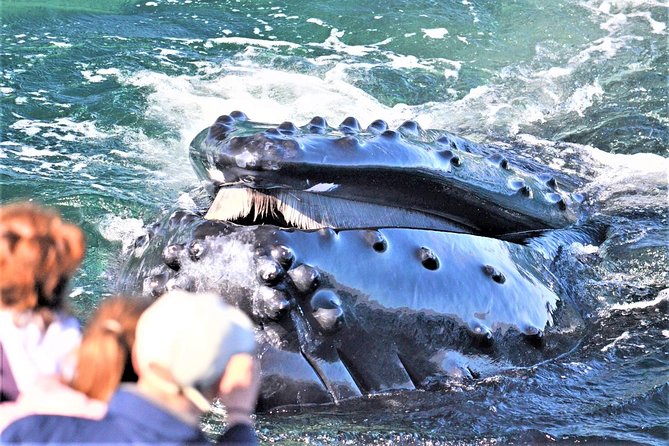
This cruise leaves from Long Wharf in Boston and heads out toward Stellwagen Bank National Marine Sanctuary, a feeding area at the mouth of Massachusetts Bay. The goal is simple: get you to where marine life feeds, then keep you there long enough to actually spot something.
On a slower boat, a good chunk of your tour can get eaten by transit. Here, the high-speed vessel helps you compress that travel time so you’re spending a bigger slice of the ~3 hours 30 minutes on the water where sightings are more likely. In practical terms, that means you’re more likely to see multiple “events” during the same cruise—surface behavior, social groups, and the telltale timing of when animals show themselves.
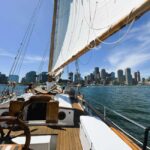
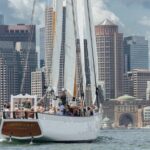
You’ll also feel the region’s layout right away. Boston’s waterfront gives you skyline and harbor views early, then the scenery shifts into open water where the ocean is the main show. That shift matters, because whale watching isn’t about walking through a destination—it’s about using your eyes and trusting the on-board guidance.
You can also read our reviews of more boat tours in Boston


Meeting Up and What to Wear (Wind + Cold Are the Real Main Characters)
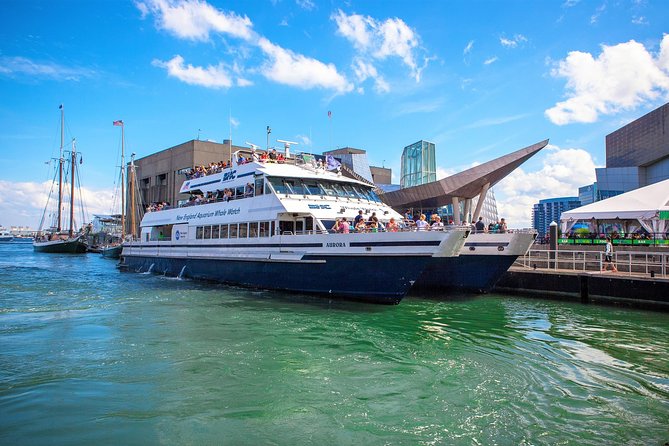
Start at 1 Long Wharf. Boarding begins about 30 minutes before departure, and late arrivals can miss the boat—so plan to arrive early, even if you think you’re right on time.
Bring:
- Sunscreen and sunglasses (even when it’s cool, glare off the water adds up)
- A light sweater or jacket for wind
- Something warm for later in the trip, since the open ocean can feel colder once you’re moving
From real-world experience on boats like this, wind is the thing that sneaks up on people. You might start the cruise in decent weather, then feel that steady chill when you’re outside on deck for spotting. If you tend to get cold easily, treat this as a “bring more layers than you think you need” tour.
The Naturalist Factor: How You Go From Spotting Shapes to Real Identifying
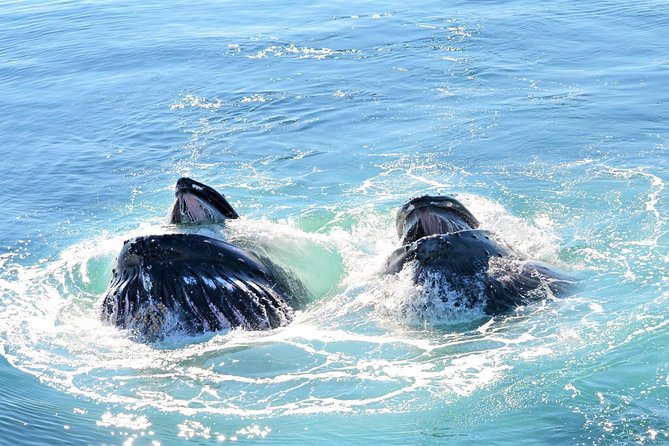
The backbone of this experience is the naturalist narration. You’re guided by a New England Aquarium naturalist (and Whale Center of New England knowledge is part of the program) who helps you track what you’re seeing and why it matters.
Here’s what the cruise is built around. As you work the search area at Stellwagen Bank, you’re looking for:
- Humpback whales
- Fin whales
- Minke whales
- Pilot whales
- Atlantic white-sided dolphins
- Plus sea birds and other marine life you might notice during scanning
What I like about this approach is that the naturalist doesn’t just name animals. They explain behaviors and conservation context, plus how scientists track and study marine mammals. That turns the whole outing from a one-time photo trip into something you’ll remember and talk about later.
Also, you’ll benefit from the crew’s ability to point out targets quickly. One named naturalist/guide that people have specifically credited for strong fun facts is Colin, and that matches the overall vibe you want: lively, accurate, and ready to answer questions without turning into a lecture.
Species-spotting tip that actually helps
If you can, keep your eyes moving rather than staring at one spot. Whales and dolphins are not always visible continuously. The best view often comes from quick tracking—then scanning the horizon again once the first sighting passes.
Inside Cabin vs. Outside Deck: Comfort Strategy for 3.5 Hours
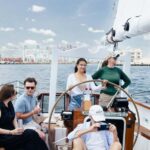
This cruise gives you both worlds. You’ll have time outside on deck for spotting, but you can duck inside to the air-conditioned cabin when you need a break.
The inside cabin is a big deal because it changes how you experience the cruise:
- You can warm up while the boat keeps moving.
- You can reset your eyes for the next spotting window.
- You can keep the experience comfortable even on windier days.
There are also restrooms on board, and that sounds basic until you’re on the water for hours. Having that option makes the trip feel far less “mission-based.”
That said, big boats mean you’ll share space. There’s practical crowd flow: people will go in and out between spotting calls, which can make deck movement feel busy at times. If you’re sensitive to standing for long stretches, consider planning your deck time in chunks. Stand for a bit, warm up briefly, then head back out when you hear activity.
Stellwagen Bank: What the Search Area Is Doing for You
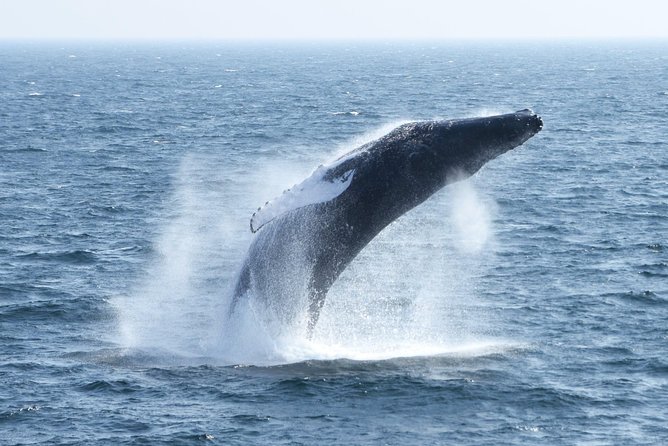
Stellwagen Bank National Marine Sanctuary is where your odds get better, because it functions as a feeding ground. In whale watching terms, feeding grounds are where you’re more likely to see repeated surface behavior—animals come to eat, and they return.
As the boat works the area, the cruise is designed to maximize your time looking outward from the water. That’s why the timing feels deliberate: you’re not just cruising around randomly. You’re in a known marine sanctuary zone where marine life is more likely to show up.
What you’ll notice during the search is that sightings can cluster. On some outings, you might get whale action sooner and then see multiple appearances. On others, the early time can feel slow, and then the animals show up all at once once conditions line up.
So if your expectation is that you’ll see something immediately, adjust it slightly. Plan to spend time scanning patiently, and recognize that patience is part of the process.
When sightings are slow
If you hit a quiet stretch, keep your focus on what the naturalist is telling you. Often, their guidance helps you understand why you’re not seeing anything yet—like changing conditions in the search area. And once animals do show up, they tend to stay interesting, with close views sometimes happening quickly.
Photo and Viewing Reality: Getting Better Angles on a High-Speed Boat
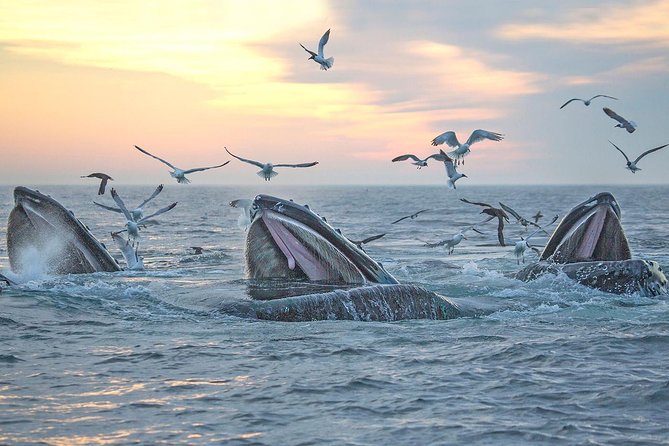
This is one of those tours where “where you stand” affects what you see. Even on a high-speed vessel, you’ll want to choose a viewing spot that gives you clear sightlines to the water.
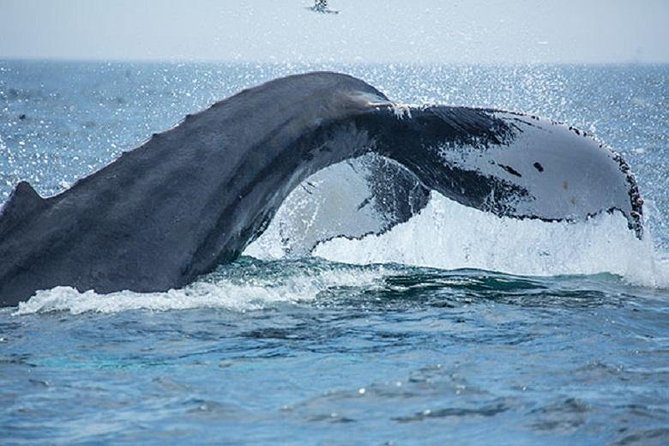
In good conditions, people describe being able to see whales close enough for satisfying views and photos, including humpbacks showing surface behavior right alongside the boat. But the important word here is chance. Whale watching is never a guaranteed animal-sighting show.
To improve your odds:
- Spend meaningful time on the deck when the naturalist calls attention to activity.
- Stay flexible and avoid assuming the first sighting is the only one.
- Keep your phone/camera ready, but don’t obsess over recording. Watching the behavior first often leads to better shots.
Also, if you’re the kind of person who gets motion sickness, protect yourself early. The tour notes it’s not recommended for motion-sickness-prone guests, but people have shared success with preparedness—packing motion sickness help and staying comfortable with proper clothing and timing.
On-Board Food, Drinks, and the Small Comforts That Matter
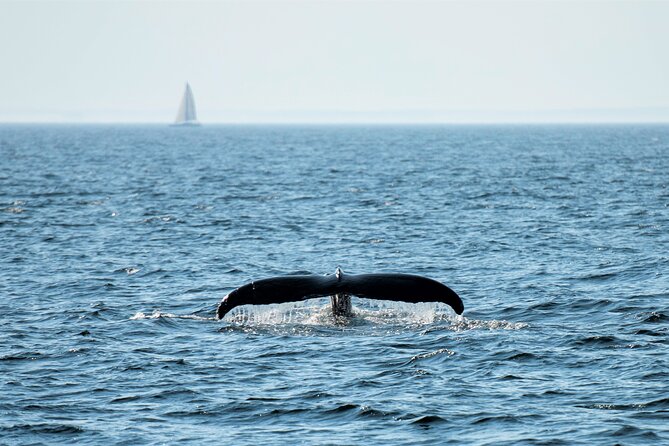
Food and drinks are available to purchase on board, not included in the ticket price. Having that option is good if you get hungry during the long ride, and reviews also mention the snack bar being well stocked.
I think the smarter way to think about this cost is simple: plan to spend a little on drinks or snacks so you don’t lose focus when your energy dips. Bring your own snacks only if you’re comfortable doing so within any rules you’re given at booking (those rules aren’t specified here), so the safe bet is to budget for on-board purchases.
You’ll also appreciate that there are restrooms and a climate-controlled cabin. Those amenities sound like a checkbox, but on a whale-watch they directly affect whether you enjoy the waiting time.
Price and Value: Is $85.56 Worth It?
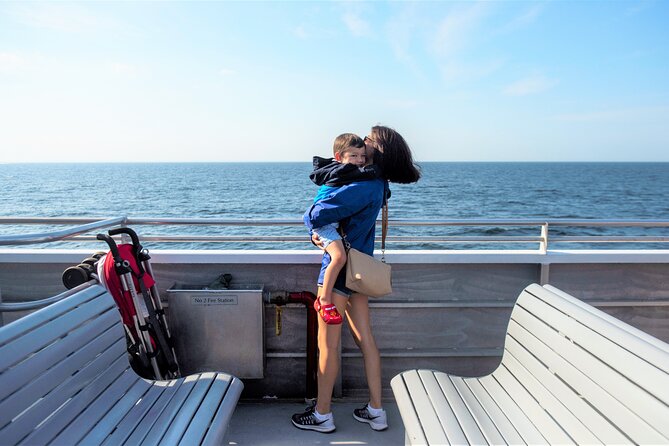
At $85.56 per person, you’re not paying for a museum ticket or a fixed “one item on a list.” You’re paying for access to a specific marine sanctuary zone, on a boat designed to move fast enough to make the outing meaningful, with naturalist guidance that improves your odds of identifying what you’re seeing.
Here’s how I judge value on this kind of tour:
- If the boat gets you to Stellwagen Bank efficiently, the time on the right water is valuable.
- If the narration helps you understand behavior, you get more than just sightings—you get context.
- If the boat is comfortable enough to ride out waiting periods, you actually enjoy the experience.
There’s also a practical upside: the cruise can return with a mix of whales, dolphins, and sea birds rather than being a single-species gamble. And when sightings are strong, the experience can feel like more than you paid for because the views are genuinely close and dramatic.
The only real value risk is the same one with all whale watching: you might not see as many animals as you hoped. Still, the cruise is built to keep you engaged and informed throughout, so even a slower outing isn’t just “stare at water and hope.”
Who This Cruise Fits Best (and Who Should Skip It)
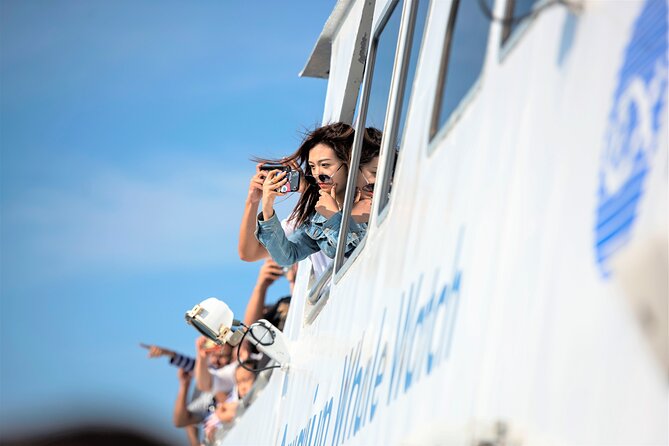
This is a strong match if you:
- Want a guided whale watch instead of a solo scanning mission
- Like science and conservation context, not just sightseeing
- Prefer a trip with indoor comfort so you can manage cold and wind
It can also work well for solo travelers—there’s enough going on that you’re not waiting for a group to move at your pace. Couples and families can enjoy it too, and some on-board activities for kids have been mentioned in practice, which helps during the longer ride segments.
Skip it or think carefully if you:
- Are prone to motion sickness and know you struggle on boats
- Hate standing for long periods during deck scanning (some seating limits can make the outside time feel more physical)
- Get overwhelmed by crowds moving between deck and indoors during active periods
For most people, though, the tour states that most travelers can participate, and service animals are allowed. So the overall setup is fairly welcoming—just be honest with yourself about motion sickness and cold tolerance.
Should You Book This Whale-Watching Cruise from Boston?
I’d book it if you’re visiting Boston and you want a real outdoor wildlife experience tied to Stellwagen Bank with naturalist help. The combination of high-speed travel, expert narration, and an indoor cabin makes it a smart use of a half-day, and it’s one of the better ways to see marine mammals without dedicating a full day or giving up comfort.
I’d hesitate only if you know you get sick on boats or you’re the type who needs predictable results. Whale watching has chance built in. But if you show up prepared—layers, sun protection, and a plan for comfort—this cruise gives you a genuinely good shot at unforgettable sightings.
If you can, go in cooler months too. People often report being very lucky during fall and shoulder-season outings, and the calm routine of the narration plus the fast vessel makes the whole thing feel focused, not chaotic.
FAQ
How long is the whale watching cruise?
It’s about 3 hours 30 minutes (approx.).
Where does the cruise start and end?
It starts at 1 Long Wharf, Boston, MA 02110, USA, and ends back at the same meeting point.
What animals might you see?
The cruise is set up for sightings of humpback, fin, and minke whales, plus pilot whales, Atlantic white-sided dolphins, and sea birds/other marine life.
Is food and drinks included?
No. Food and drinks are available to purchase on board.
Does the boat have indoor space and restrooms?
Yes. There’s an air-conditioned indoor cabin and a restroom on board.
What language is the tour offered in?
The tour is offered in English.
What if I get motion sickness?
The cruise is not recommended for guests prone to motion sickness. Sea sickness medication isn’t included, though you can bring your own.
Is the whale watch dependent on weather?
Yes. It requires good weather. If it’s canceled due to poor weather, you’ll be offered a different date or a full refund.