REVIEW · SANTA CRUZ
LA PINTA DARWIN’S LEGACY (Fri-Thurs)
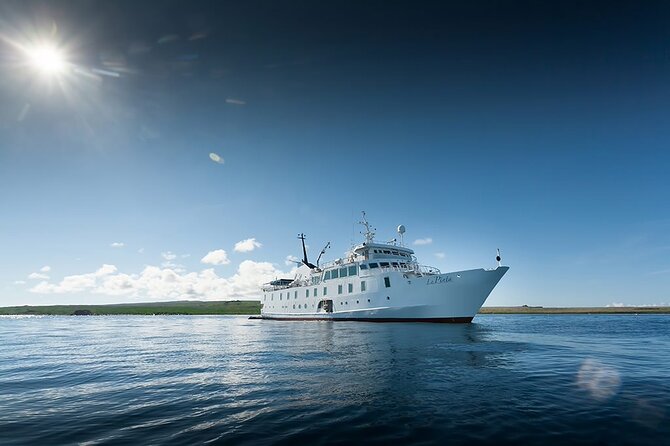
Book on Viator →Operated by Metropolitan Touring · Bookable on Viator
Galápagos hits hard, fast. This 7-day La Pinta cruise is built around close-up animal encounters on volcanic islands, run by certified naturalist guides and supported by a doctor onboard. I love the small-ship feel—with a capped group size around 48—so you spend more time watching wildlife and less time waiting in lines.
My favorite part is the variety of ways to experience the water. You can snorkel (with provided wetsuits and gear), ride glass-bottom boats, and join dinghy/panga coastal rides or even kayaking when conditions allow. It’s the kind of planning that lets you match your energy level to the day, not the other way around.
One heads-up: this trip can be physically demanding. Even if you’re comfortable with hikes and moving around on rocky or wet surfaces, you’ll still be getting on and off boats and doing active excursions with a busy schedule.
In This Review
- Key highlights worth booking for
- Price and value on a $7,946-per-person cruise
- Day 1: Baltra start, panga timing, and your first wildlife run
- Day 2: Isabela’s lava cliffs and Fernandina’s penguins
- Day 3: Urbina Bay corals, whales at sea, and Tagus Cove’s saltwater crater
- Day 4: Rabida’s red beach snorkeling and Cerro Dragon lagoon birds
- Day 5: Darwin Research Station facts, then Santa Cruz highlands for wild tortoises
- Day 6: Floreana’s Post Office Barrel, then Cormorant Point and flamingos
- Day 7: Baltra airport transfer and a last look at the flat island truth
- Onboard La Pinta life: comfort, food, and evenings that teach
- Practical tips: how to enjoy every landing (and still feel good at the end)
- Should you book La Pinta Darwin’s Legacy?
- FAQ
- How long is the La Pinta Darwin’s Legacy cruise?
- Where does the tour start, and what time does it begin?
- What’s included in the price for this cruise?
- Is the Galápagos National Park entrance fee included?
- Do you provide snorkeling equipment and wetsuits?
- Is there medical care available onboard?
- What fitness level do I need?
- Is Wi-Fi reliable during the trip?
- What are the baggage limits and Galápagos restrictions?
Key highlights worth booking for
- Certified naturalist guides who explain what you’re seeing as you see it
- Multiple water options: snorkel, glass-bottom, kayaks, paddleboards, and pangas
- La Pinta’s onboard comfort including a doctor 24/7, 24/7 coffee station, and a natural history library
- Iconic islands in one run: Isabela, Fernandina, Santa Cruz, Floreana, plus key visitor sites
- A tight rhythm of daily excursions (often more than one active outing per day)
Price and value on a $7,946-per-person cruise
At $7,946 per person for ~7 days, this is not a bargain trip. The value is in what you don’t have to arrange yourself—and what’s included once you’re on the ship.
You’re paying for:
- Island sightseeing with certified naturalist guides
- All your meals (6 breakfasts, 6 lunches, 6 dinners)
- A full “active day” kit: wetsuits, snorkeling equipment, plus use of glass-bottom boat, kayaks/paddleboards, and pangas for coastal exploration
- Landing and facility fees, plus shipboard spaces like a reading room and outdoor terrace
- Doctor onboard 24/7, which matters when you’re doing ocean activities in remote places
What’s not included is also clear. You’ll still need to budget for Galápagos National Park entrance, the Ingala Transit Control Card, and airport-related items (domestic logistics and park/entry costs). Soft drinks and alcohol cost extra, and you’ll want medical and travel insurance even if you have medical staff onboard.
Bottom line: if you want a “handle it all for me” Galápagos week with daily nature time and strong guide support, this fits. If you’re the type who likes to DIY every transfer and visitor site, you’ll probably resent the fixed cost.
Day 1: Baltra start, panga timing, and your first wildlife run
Your day begins with a morning flight to Baltra and an immediate dock transfer to Yacht La Pinta. After an onboard briefing, you’ll do an emergency boat drill—a good sign in a place where safety and procedures matter.
Then you’ll head out on land the same day. The Santa Cruz-side excursion (run as a coastal walk plus inner-area exploring) focuses on seeing how the islands “live” with the people and animals nearby. Expect bird colonies, plus sea lions and land iguanas. There’s even the option of going exploring by dinghies.
Why I like this start: it gets you grounded without wasting your first day. You’re off the plane, you’re outdoors, and you’re already learning the rhythm—what to look for, how the guides talk about species, and how wildlife behaves around you.
Potential drawback: because it’s day-one energy, you’ll likely be active earlier than you’d do on a slower land trip.
Day 2: Isabela’s lava cliffs and Fernandina’s penguins
Day 2 is all about big geology and close-to-the-water wildlife.
Punta Vicente Roca (Isabela) is done by dinghies because there’s no disembarking site. This matters. You’re not just walking to a view—you’re exploring along dramatic lava flows and tuff layers with naturalist guidance. Wildlife tends to show up fast here, and depending on conditions you may snorkel near the cliffs, often with green sea turtles in the picture.
In the afternoon you shift to Punta Espinoza (Fernandina) on a younger, less-disturbed island. This is where you get that classic Galápagos feel: barren terrain next to big wildlife energy. Highlights include hawks, penguins, flightless cormorants, and volcanic views that help you understand why Darwin’s ideas were so believable.
What to consider: Fernandina’s best moments are weather-dependent. If visibility or sea conditions aren’t ideal, the experience may feel more “wildlife spotting and viewing” than “maximum water time.”
Day 3: Urbina Bay corals, whales at sea, and Tagus Cove’s saltwater crater
Day 3 balances underwater life, whale luck, and a hike with a dramatic payoff.
At Urbina Bay (Isabela) you disembark on the western side. This visitor site exists because of tectonic uplift, and you’ll see corals and shells up close—alongside colorful land iguanas. Giant tortoises are possible. Then you sail across the Bolívar Channel with a high chance of whale sightings. Even if whales don’t show, the guide explanations make the boat time feel like part of the tour, not a transfer gap.
Tagus Cove (Isabela) is a different vibe. It was once a pit stop for pirates and whalers, and now it’s a superb visitor site. You’ll disembark for an uphill hike to the rear of Darwin Crater, which is filled with saltwater. After that, you can choose between snorkeling or kayaking along the coast.
Practical consideration: Tagus Cove includes a hike. If you’re fine with steady uphill effort, it’s great. If you’re sensitive to uneven footing, take it slow and use any offered pace options.
Day 4: Rabida’s red beach snorkeling and Cerro Dragon lagoon birds
Day 4 is a strong land-and-water combo.
At Rabida Island, you land at a red-colored beach. This is a classic wildlife mixing bowl: you can spot marine iguanas, mockingbirds, yellow warblers, and Darwin’s finches while walking the shore. Snorkeling can be done right from the beach. Non-snorkelers can use the glass-bottom boat to explore underwater life without getting wet.
In the afternoon you head to Cerro Dragon (Dragon Hill) on Santa Cruz. The hike circles a brackish-water lagoon, often busy with lagoon birds. Inland, you get bay views across the archipelago. Land iguanas are possible too.
Why this day works: it changes your perspective. Day 2 and 3 push geology and big animals. Day 4 gives you a calmer tempo—walk, watch, snorkel—while still delivering real wildlife action.
Day 5: Darwin Research Station facts, then Santa Cruz highlands for wild tortoises
This day is where the trip earns its name: Darwin’s legacy through science and conservation, not just “cool animals.”
First stop is the Charles Darwin Research Station. You see giant tortoise pens and an impressive cactus forest of prickly pear. This is the kind of place that makes you understand why Galápagos doesn’t stay “pristine” by luck—it stays protected by research, rules, and constant effort.
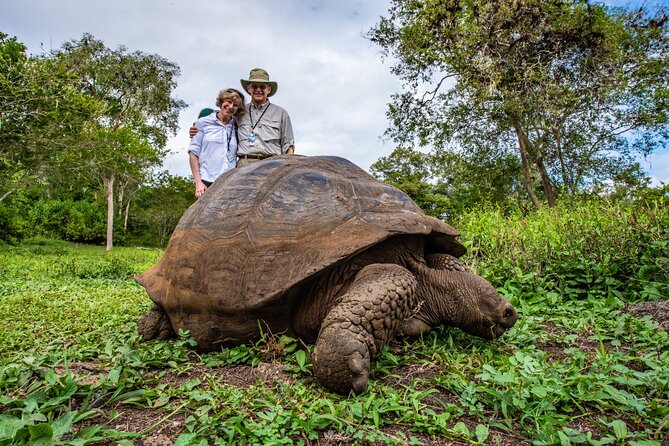
After lunch you go to Highland View Galapagos on Santa Cruz via private bus. The highlands bring a different ecosystem: endemic scalesia trees, finches that connect to Darwin’s observations, and giant tortoises that roam freely in the wild.
If you like wildlife photos, this day matters. The light and habitat are different than the coast, and the explanations help you identify what you’re seeing instead of just stacking sightings.
Day 6: Floreana’s Post Office Barrel, then Cormorant Point and flamingos
Day 6 brings history and beach ecology into one package.
At Post Office Bay (Floreana) you visit the historic Post Office Barrel, which has functioned as a post office in the archipelago for over two centuries. It’s one of those human stories that makes the islands feel more layered than just nature.
You may also enjoy dinghy rides along north-shore channels, plus viewpoints including La Lobería and Baroness Viewpoint. The area also supports kayaking and swimming from the beach when conditions allow.
Later, you head to Champion Islet & Cormorant Point. Before disembarking at Cormorant Point, snorkeling or a glass-bottom route may show you the coast of an extinct cone called Champion Islet. At Cormorant Point itself, the features are very specific: an olivine-crystal beach, a brackish lagoon with bird life such as American flamingos, and a walk to a white-sand beach where sea turtles may come ashore to nest.
What to consider: nesting and wildlife behavior can’t be guaranteed. But the location choices are smart, and you’ll understand why rangers protect these beaches when you see the habitat firsthand.
Day 7: Baltra airport transfer and a last look at the flat island truth
Your final day is a wrap-up. You return to Baltra and transfer to the airport for your flight back to the mainland.
Baltra’s flatness has a reason: it’s tectonically uplifted, and the island was chosen back in the 1940s as the site for building an airport. It’s a small detail, but it connects the “geology class” you’ve been getting all week to the logistics that move you home.
Onboard La Pinta life: comfort, food, and evenings that teach
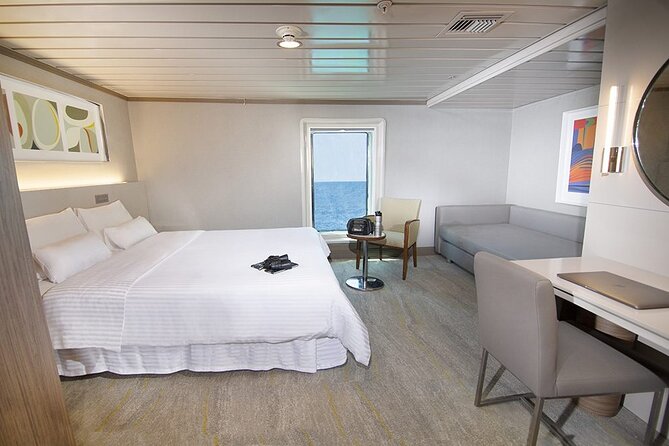
This isn’t just about stepping onto islands. The ship experience supports your pace.
You’ll have a doctor onboard 24/7, which is reassuring if you’re prone to seasickness, have health needs, or just want peace of mind when the ocean is active.
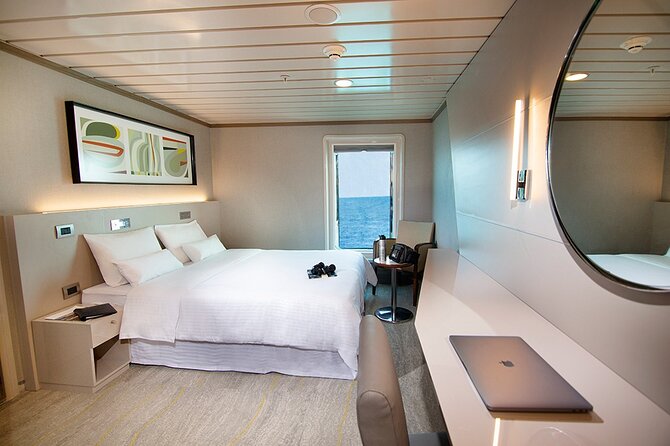
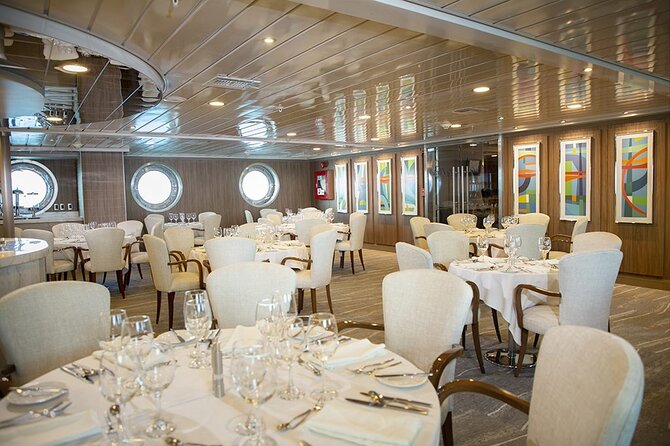
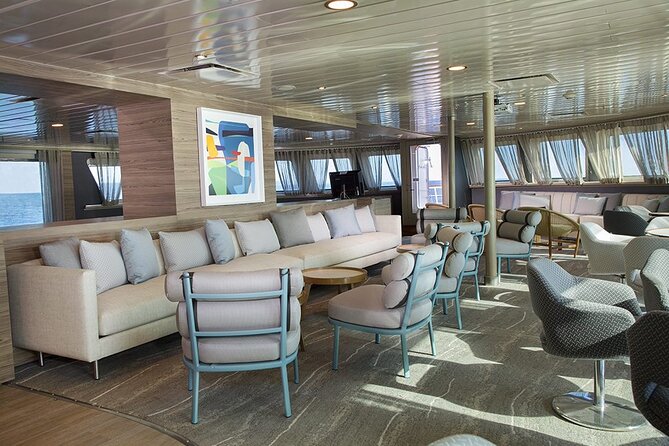
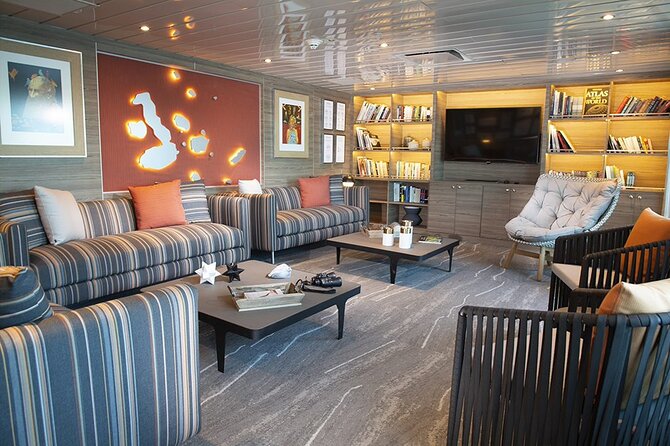
Onboard spaces include a natural history library, an outdoor terrace, and a coffee station 24/7. Wi-Fi exists, but it’s intermittent and low-bandwidth—so plan on messaging being spotty, and keep expectations realistic.
Food is included every day: breakfasts and lunches on the move, dinners back onboard. Many people love how the schedule balances activity with downtime, so you’re not exhausted before the next outing.
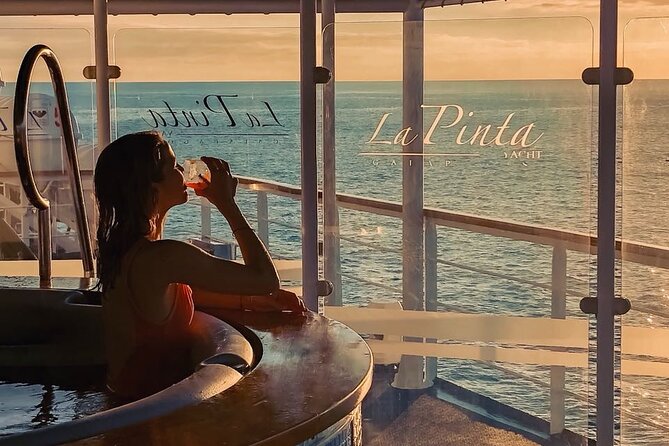
You may also enjoy evening programs: there are presentations about what’s next, plus learning moments like stars in both hemispheres, depending on the day’s onboard schedule. One of the reviews also mentioned a jacuzzi on board and a night with entertainment.
Guide quality is a huge part of why this cruise works. Names that come up include Cathy, Dries, Indira (Indi), David, Desi, and the destination-team planning support Carolina Escobar, Diego, Melissa Altamirano, and Maria Emilia, plus the ship crew members Jefferson, Gabby, and Roberto. When guides know the islands deeply, you don’t just collect photos—you learn what to look for next time you see an animal.
Practical tips: how to enjoy every landing (and still feel good at the end)
This cruise rewards preparation. A few things help a lot:
- Bring sturdy waterproof sandals (the kind that won’t betray you on wet rocks).
- Use UV protection: long sleeves and a hat help with sun between outings.
- Be ready for waves when boarding and leaving boats. Even if you’re healthy, ocean motion is part of the deal.
- Plan your day energy: the schedule can include at least two excursions daily, sometimes more. If one activity sounds too intense, you usually have options like glass-bottom viewing instead of full snorkeling.
- Pack light where possible because Galápagos quarantine rules are strict and luggage is handled with inspections.
On baggage: airline limits are 23 kg for checked items and 8 kg for hand luggage, plus one personal item. Everything should be securely packed and clearly labeled.
On quarantine: Galápagos authorities control what moves between islands to prevent introducing foreign species. You can’t transfer a long list of items, including fresh fruits and vegetables, animal products and dairy, and food/plant items like soil and sand. If you’re unsure about something, leave it out.
Should you book La Pinta Darwin’s Legacy?
Book it if you want a guided, high-output Galápagos week where you’re set up for both land hikes and water time, with equipment handled and daily meals taken care of. The combination of certified naturalists, a doctor onboard 24/7, and a ship that supports frequent excursions makes it a strong choice for people who want maximum nature time without stressing over logistics.
Skip it (or at least rethink) if you dislike active days, rocky footing, and ocean boarding, or if you’re very price-sensitive and want a DIY-style trip. This one isn’t a laid-back coast cruise—it’s an organized nature schedule, built for people who actually want to do things.
FAQ
How long is the La Pinta Darwin’s Legacy cruise?
It’s listed as a 7-day tour (approx.).
Where does the tour start, and what time does it begin?
The start is at Galápagos Ecological Airport (Seymour, Baltra). The start time is 10:00 am.
What’s included in the price for this cruise?
Included items are certified Naturalist Guides-led island sightseeing, a doctor onboard 24/7, glass bottom boat/kayaks/paddleboards/pangas for excursions, landing and facility fees, onboard reading/library/coffee station access, wetsuits and snorkeling equipment, daily breakfast/lunch/dinner, Wi-Fi, and safe deposit boxes.
Is the Galápagos National Park entrance fee included?
No. The Galápagos National Park entrance is not included.
Do you provide snorkeling equipment and wetsuits?
Yes. Wetsuits and snorkeling equipment are provided.
Is there medical care available onboard?
Yes. There is a doctor onboard 24/7.
What fitness level do I need?
The tour asks for a moderate physical fitness level.
Is Wi-Fi reliable during the trip?
Wi-Fi is available, but because of the remote location it’s intermittent and low-bandwidth.
What are the baggage limits and Galápagos restrictions?
Airlines are strict: 23 kg for checked luggage, 8 kg for hand luggage, and 1 personal item. Also, Galápagos quarantine rules restrict what can be transferred, including fresh vegetables/fruits and many animal and dairy products, plus items like soil/sand and other plant/food items listed in the restrictions.