REVIEW · AKUREYRI
Whale Watching on a Traditional Oak Sailing Ship from Husavik
Book on Viator →Operated by North Sailing · Bookable on Viator
Whales wait offshore in old-school style. I like the chance to be part of the crew, hoisting sails and hauling ropes, and I also like the cold-weather suits that keep you warm and dry in rough northern wind. The trade-off: whales can be shy, and the sea can feel bouncy even when everyone is dressed for it.
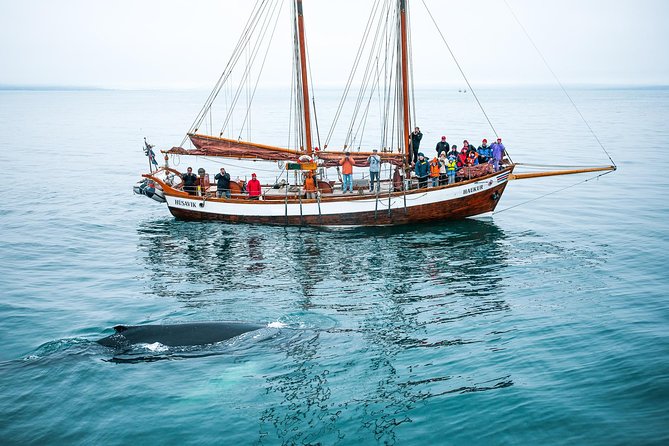
This is a classic Húsavík whale-watching outing from the North Sailing operation, sailing from the harbor on one of three traditional wooden boats—the Haukur, the Opal, or the Hildur. On the way back, you warm up with cinnamon buns and hot chocolate while the guides bring the whole day back into focus (including real names like guide Laura from the crew you might encounter on board).
In This Review
- 5 key points that make this Husavik whale watching tour different
- Traditional Oak Schooner Whale Watching: The vibe you feel on day one
- Where you meet in Húsavík and how you get aboard so you’re not rushed
- Crew-style sail help, real whale search narration, and why the suits matter
- How the 3-hour window plays out on the water
- What whales you might see—and what to do when they’re shy
- A practical viewpoint tip
- Cinnamon buns and hot chocolate: the comfort that makes cold sailing worth it
- Value check: is $106 worth it for 3 hours in Húsavík?
- Who should book this schooner whale watch (and who might want a different style)
- Families and kids
- Quick note on weather, canceled sails, and getting a second chance
- Should you book this traditional oak sailing ship whale watching from Húsavík?
- FAQ
- How long is the whale watching tour?
- Where do I pick up my ticket in Húsavík?
- Where does the tour depart from?
- What boats might I sail on?
- What time should I arrive?
- What’s included besides whale watching?
- Do I need to bring cold-weather clothing?
- Is lunch included?
- What if the weather is too poor to sail?
- How many people are on board?
5 key points that make this Husavik whale watching tour different
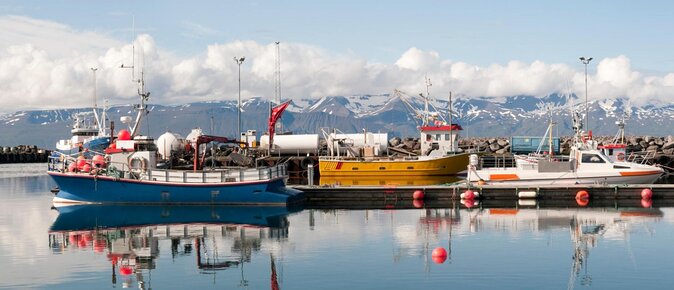
- Traditional wooden schooners (Haukur, Opal, Hildur) leave from Húsavík harbor on a classic sailing setup.
- Crew participation is real: you can help with sails and ropes if you want.
- Warmth is planned for with provided cold-weather suits designed for wind and spray.
- Guides narrate the search so you understand what you’re looking at, not just hoping for a sighting.
- A warm finish: cinnamon buns and hot chocolate on the return sail.
Traditional Oak Schooner Whale Watching: The vibe you feel on day one
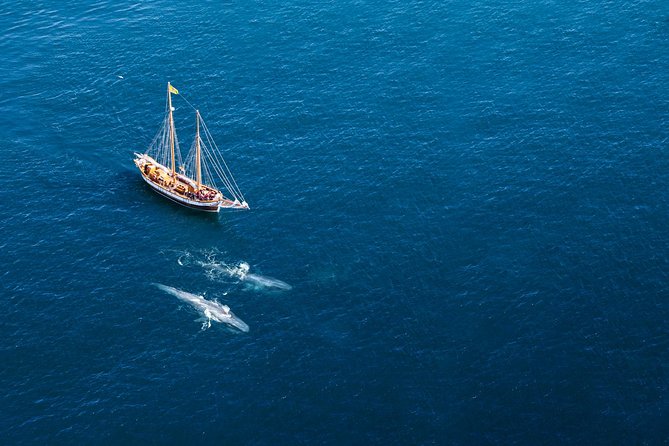
Húsavík has earned its reputation for whales. But what I really like about this tour style is the way it slows you down. You’re not just scanning from a platform. You’re moving with the ship, feeling the wind shift, and watching the bay come alive around you.
This is a 3-hour outing at sea, run on a traditional Icelandic schooner format. That matters. Sailing is quieter and more “natural pace” than the typical faster power-boat approach you may see elsewhere. Several people specifically appreciated that it felt respectful rather than like a chase, which can change how whale watching feels when a pod shows up.
And it’s not just scenery. The crew element makes it participatory without turning it into a lesson in sailing history. If you’re curious, you can jump in with small tasks such as hoisting sails and hauling ropes. If you’re not feeling that active, you can still watch from the deck and let the guides do the explaining.
Where you meet in Húsavík and how you get aboard so you’re not rushed
Plan your start like a local: early, calm, and layered. You pick up your tickets at the North Sailing Ticket Centre at Hafnarstett 9, just across from Húsavík Church. From there, it’s about a 2-minute walk to the harbor.
They ask you to arrive 30 minutes ahead of departure. Do it. Not because you’ll need to kill time, but because the first 20 minutes on a cold deck can feel like a blur if you show up at the last second—especially if you want help getting your cold-weather suit on correctly.
Once you’re at the harbor, you board one of the three traditional wooden vessels: Haukur, Opal, or Hildur. The name of the boat can matter for the feel of the trip. One review praised the ship’s good access to both sides, which is exactly what you want when whales decide to surface on one side of the bay more than the other.
If you’re worried about where you’ll stand or sit, arrive early enough to find a spot that gives you a clear view without having to constantly squeeze past people.
Crew-style sail help, real whale search narration, and why the suits matter
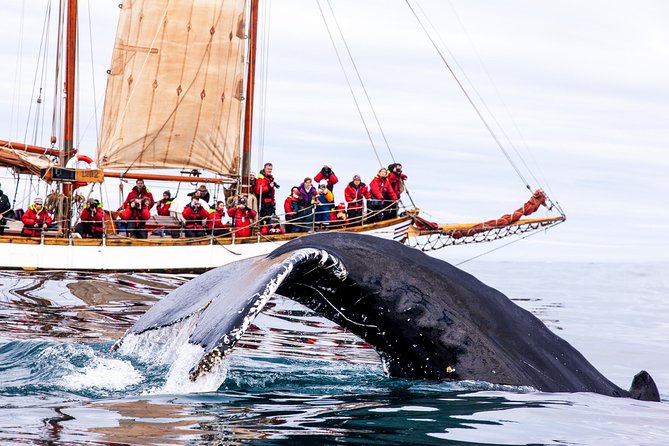
The day is built around a simple rhythm: get moving on sail, search for whales, and listen while you look. What makes this tour feel high quality is that the whale watching isn’t left to luck and silence.
On board, you’ll get narration from guides while the crew searches. The best tours are the ones that teach your brain how to read the sea. Here, the guides add context about the natural environment—so when you see spouts, body breaks, or sudden surface activity, it’s not just a random moment. You have a framework for what you’re likely seeing.
Now, about the cold-weather suits. Yes, they provide special suits to keep you warm and dry. But don’t treat that as a reason to show up lightly dressed. A common lesson from the colder side of North Iceland is that layers still matter, because the wind and spray don’t negotiate with comfort.
If you’re prone to feeling cold fast, this is the kind of tour where you should double down on warm layers underneath the provided overalls. You’ll be standing and moving with the ship. Even on a good day, the deck can feel colder than the shore.
How the 3-hour window plays out on the water
You’re looking at about 3 hours total on the water. In practice, that usually means the tour isn’t just “sail, hope, leave.” It’s more like a series of focused segments.
1) Boarding and getting set
You step onto the schooner, get oriented, and settle in with your suit and layers sorted. If you want to help, this is when you can ask where you’ll fit best with tasks like rope handling or sail adjustments.
2) Sailing out and scanning the bay
As you move, guides keep narrating while the captain steers the ship to where whale activity is likely. One of the big advantages of the schooner style is that you’re not constantly blasting across the water. You can maintain a more continuous look.
3) Whale watching moments when they show
When whales appear, the deck becomes a group sport. People shift positions, cameras come up, and everyone tries to frame the same moment. Some days bring multiple sightings. Other days bring fewer sightings, or whales that surface briefly and move on.
4) Return sail and warm-up
On the way back, you get cinnamon buns and hot chocolate. That might sound like a small detail, but after wind and spray, warm sweetness is morale in food form.
Also note the operator runs multiple departure times, so you can pick a slot that best matches your weather window.
What whales you might see—and what to do when they’re shy
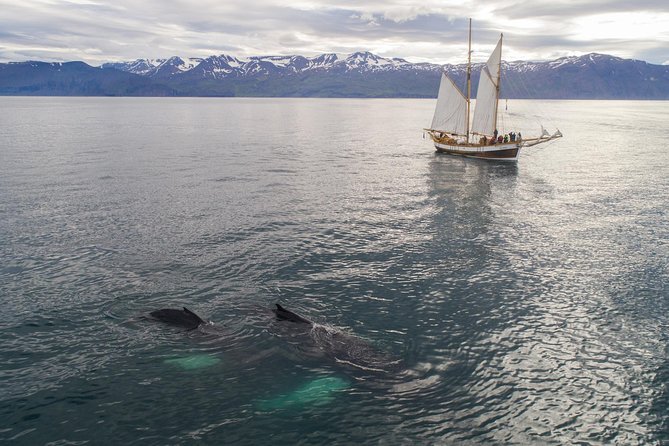
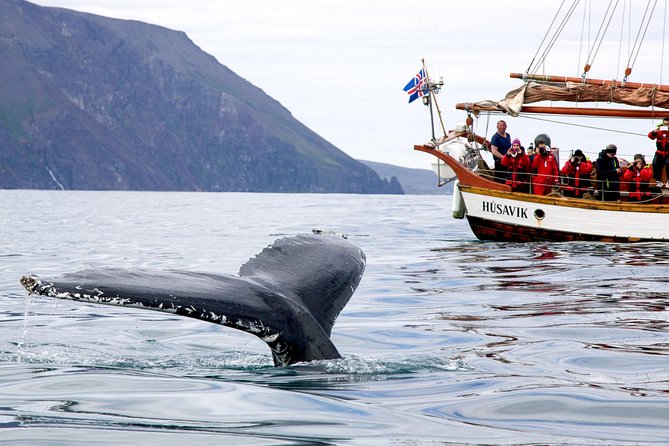
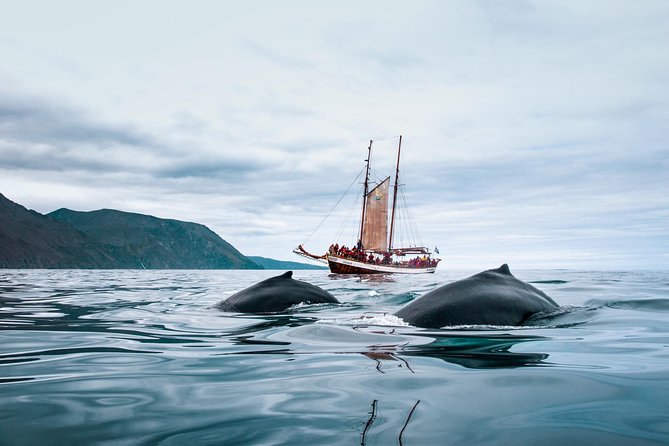
The goal is whale watching, and the sightings people reported include humpback whales and minke whales, plus dolphins. One person described an impressive day with multiple humpbacks, including a close view of flukes—those are the trailing parts you often only see when whales change direction under the surface.
But here’s the honest part: whale sightings are never guaranteed. Even the best guides can only work with the behavior of animals, and that behavior changes with wind, visibility, and what the whales choose to do that day.
On some tours, whales can be “shy,” meaning you might see them from a distance, get shorter surface times, or have long periods that feel like searching. If you’re going in with the mindset that this is a search, not a vending machine for whales, you’ll enjoy it more.
Also, the conditions matter. One review mentioned sea sickness during windy conditions. That’s not surprising for a deck-based sail in Icelandic weather. If you’re sensitive to motion, consider taking motion into account before you board and aim for a calm headspace once you’re out there.
A practical viewpoint tip
Try to position yourself so you can see from both sides when the ship shifts. One review called out that the boats offered good access to both sides, which is helpful when whales choose a side you didn’t expect.
Cinnamon buns and hot chocolate: the comfort that makes cold sailing worth it
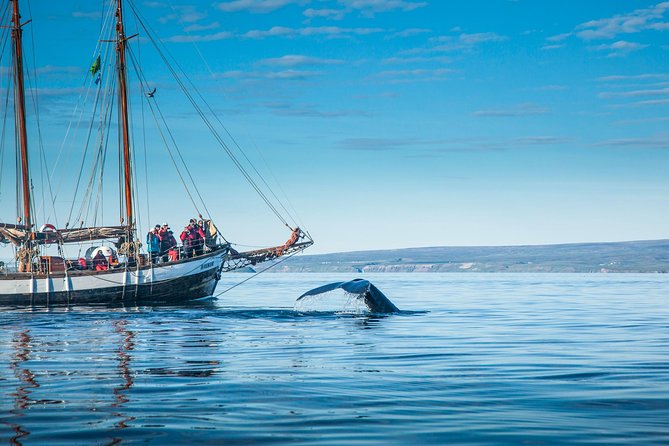
After hours outside in Icelandic wind, the “light refreshments” included here matter more than you might think. Cinnamon buns and hot chocolate aren’t a big meal, but they’re a perfect reset.
They also make the tour feel complete. You get the excitement of spotting whales, then you get a warm landing—hands around a cup, something sweet in your stomach, and a chance to decompress while the boat heads back toward Húsavík.
And yes, on cold days that warmth is genuinely noticeable. Reviews specifically praised how the hot cocoa and cinnamon buns hit the spot when it was chilly.
Value check: is $106 worth it for 3 hours in Húsavík?
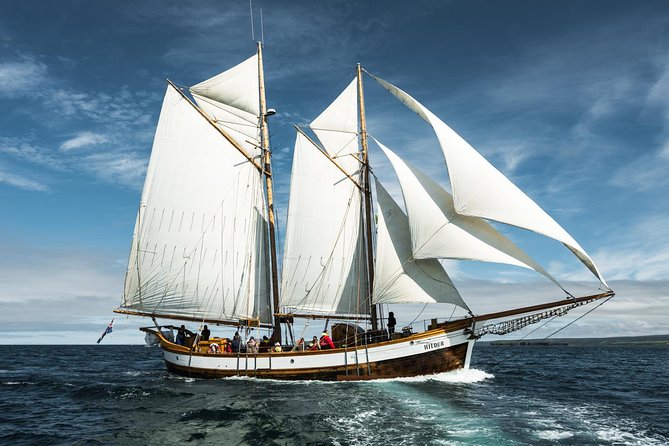
At $106 for about 3 hours, the pricing isn’t bargain-basement, but it’s not out of line either for serious whale watching. Here’s why this price can still feel like good value:
- You’re paying for a guided search with narration, not just boat rental.
- The tour includes provided cold-weather suits, which can be a real cost-saver if you don’t want to buy gear for a one-time trip.
- You get light refreshments at the end.
- The experience is designed as more than passive viewing. If you want it, you can participate as part of the crew, which changes how time feels.
Also, some people who compared formats liked that this sailing approach can feel less like chasing. That’s a value question too: if the whales are more comfortable (or at least treated differently), your chance of meaningful sightings can improve.
If your schedule is tight and you want maximum chances at sightings, you may be tempted to choose faster boat options elsewhere. But if you care about atmosphere, learning, and staying warm, the schooner format often feels worth paying for.
Who should book this schooner whale watch (and who might want a different style)
This is a great match if you:
- Want a classic traditional sailing experience tied directly to whale watching.
- Enjoy hands-on moments like hoisting sails or hauling ropes.
- Prefer guided narration so you understand what you’re seeing.
- Like the idea of warming up with cinnamon buns and hot chocolate at the end.
It may be less of a match if you:
- Are only comfortable in smooth, minimal-motion rides. Windy sails can feel rough, and people have mentioned sea sickness.
- Expect a guaranteed number of whales. Some days are about surprise sightings; some days are about persistence and learning.
Families and kids
This tour can work well for kids because the deck activity and guide commentary can hold attention. One review noted that with a larger number of people, it can get hard for kids to get a clear view—more due to adult crowding than the boat itself. The operator also indicated they reduced capacity to improve space, with a maximum of 45 travelers for this type of sailing.
Quick note on weather, canceled sails, and getting a second chance
This experience depends on good weather. If the tour is canceled due to poor weather, you’re offered either another date or a full refund. In real-life terms, that means you should check your departure window and have flexibility in your Húsavík schedule.
There’s also a useful goodwill angle mentioned by people who had disappointing whale days: the team explained there could be an opportunity to join a free return sail on another day if whales didn’t show as expected. That doesn’t replace weather-dependent reality, but it can reduce the sting if your first attempt is unlucky.
Should you book this traditional oak sailing ship whale watching from Húsavík?
I think you should book it if your priority is a whale watching tour that feels like an actual Icelandic sailing experience, not a fast ride with spotty guidance. The combination of crew participation, provided cold-weather suits, and guide narration makes the time on the water more satisfying even when sightings aren’t dramatic.
If you’re the type who gets irritated by uncertainty, or you know you’re very motion-sensitive, you might want a different format. But if you’re comfortable dressing for wind, understand that whales control the schedule, and want the warm comfort finish, this is a smart way to spend a half-day in North Iceland.
From Húsavík harbour out into Skjálfandi Bay, it’s one of those tours where the day becomes a story whether you see one whale or several.
FAQ
How long is the whale watching tour?
It runs for about 3 hours.
Where do I pick up my ticket in Húsavík?
You pick up tickets at the North Sailing Ticket Centre at Hafnarstett 9, across from Húsavík Church.
Where does the tour depart from?
Tours depart from Húsavík harbour, which is about a 2-minute walk from the ticket office.
What boats might I sail on?
You board one of three traditional wooden sailing boats: the Haukur, the Opal, or the Hildur.
What time should I arrive?
Arrive 30 minutes before departure.
What’s included besides whale watching?
You get narration from guides and light refreshments, including cinnamon buns and hot chocolate.
Do I need to bring cold-weather clothing?
Cold-weather suits are provided to keep you warm and dry, and you’ll still want to dress in warm layers.
Is lunch included?
No, lunch is not included.
What if the weather is too poor to sail?
The tour requires good weather. If it’s canceled due to poor weather, you’ll be offered a different date or a full refund.
How many people are on board?
The maximum group size is 45 travelers.