REVIEW · PORTO
Porto Douro River Cruise With Port Wine – Daytime or Sunset
Book on Viator →Operated by BBDouro · Bookable on Viator
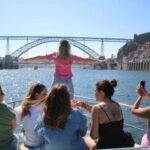
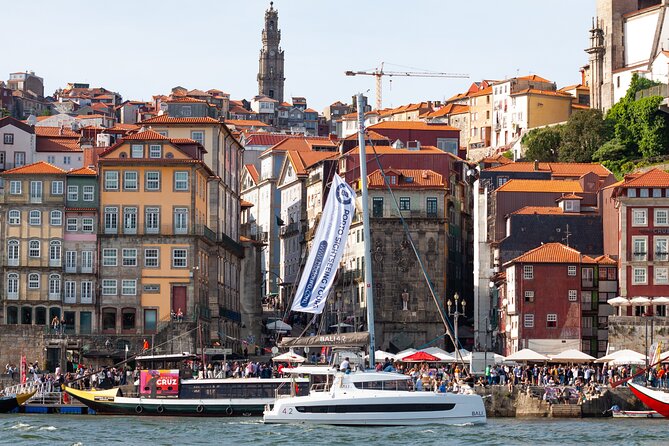
A river cruise on the Douro is the fastest way to slow down. This 2-hour sail (daytime or sunset) takes you past Porto and Vila Nova de Gaia landmarks, with a glass of port wine in hand and big views over bridges, churches, and wine cellars. If the weather cooperates, you also get that extra sense of space near the river mouth and the Atlantic.
I love the simple pleasure of being on the water while the city slides by, and I also like that the crew keeps things easy to follow in English. One thing to consider: narration and boat comfort can vary by departure (some folks feel it is more sightseeing than deep commentary), and sunset depends on cloud cover.
In This Review
- Key Points That Make This Cruise Worth Your Time
- From Douro Marina To the Atlantic Air: The Core Experience
- Port Wine on the Water: What the Included Glass Really Adds
- The Douro Estuary and Wine World: What You’ll See While Sailing
- Porto and Gaia Landmarks From the Water (Arrábida, Clérigos, Ribeira)
- Arrábida Bridge and the Porto–Gaia connection
- Clérigos Tower without the climb
- Ribeira Square and the river’s old heart
- Your 2-Hour Flow: Stop by Stop, What Each Place Means
- 1) Douro River and the estuary corridor
- 2) Douro Marina (a modern base for river life)
- 3) Afurada’s fishing identity
- 4) Ponte da Arrábida viewpoint framing
- 5) Museu do Carro Electrico and the Massarelos building vibe
- 6) Igreja da Confraria das Almas do Corpo Santo (tiles and structure)
- 7) Passeio das Virtudes and vertical terraces
- 8) Torre dos Clérigos (the tower you can’t miss)
- 9) Cais de Gaia and the port-wine waterfront
- 10) Barcos rabelos as a living symbol
- 11) Jardim do Morro and panoramic framing
- 12) Serra do Pilar viewpoint and monastery geometry
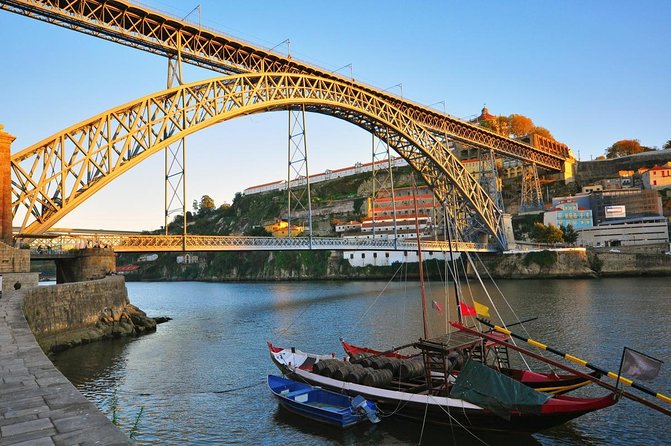
- 13) Dom Luís I Bridge (the postcard structure, now in motion)
- 14) Reserva Natural Estuario do Douro
- 15) Passeio Alegre Garden at the water’s meeting
- Sunset vs Daytime: Timing, Weather, and Comfort Tips
- Price and Value: Is $54.42 for Two Hours Fair?
- Who Should Book This Cruise (and Who Might Be Happier Elsewhere)
- Should You Book This Porto Douro River Cruise With Port Wine?
- FAQ
- How long is the Porto Douro River cruise?
- Where do I meet for the tour?
- What’s included in the price?
- What language is the guided part offered in?
- Can I bring food or drinks from outside?
- How big is the group?
- Is the cruise good for sunset?
- What’s the cancellation policy?
Key Points That Make This Cruise Worth Your Time
- Port wine included: one glass, served while you’re actually watching the city from the river
- Douro Estuary wildlife zone: you’re in a protected area on a migratory bird route
- Bridge and cellar views without the stairs: Porto and Gaia’s best-known sights line up from the water
- Small-to-medium group feel: max 58, and seating/boat spots are assigned randomly
- Seasonal comfort extras: blankets often show up when it cools down
From Douro Marina To the Atlantic Air: The Core Experience
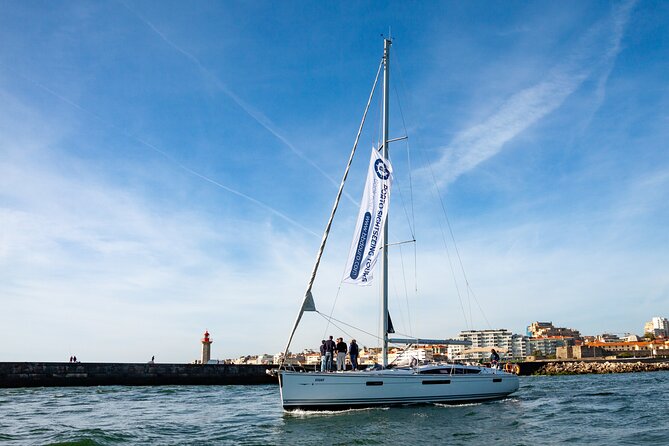
You’re meeting at Marina da Afurada on the Gaia side. That matters because you’re starting where the river life is real, not in the middle of Porto’s steep walking maze. From there, the cruise is set up as a relaxed back-and-forth along the Douro corridor, with plenty of time to look up at bridges, churches, and the cliffs of old warehouses and cellars.
This is one of those trips that works even if you’re not trying to “do” everything in Porto. You get a change of pace fast: you sit down, the water moves, and the city turns into scenery instead of a set of stairs.
You can also read our reviews of more boat tours in Porto
Port Wine on the Water: What the Included Glass Really Adds
The tour includes Wi‑fi and a glass of port wine, plus the boat tour itself. The port part is more than a souvenir drink. You’re tasting something that’s tied to exactly what you’re seeing: the river trade that fed the cellars in Gaia, especially around the waterfront where the wine was loaded and aged.
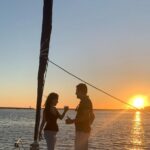
If you’re doing this at sunset, that port timing can feel extra right. A lot of people pick sunset for the light, but the port makes the moment feel like a mini event—one glass, served while you’re watching the skyline shift.
Do note a practical point: the tour is meant for shared groups, and you can’t bring outside food or drinks aboard. So come with an appetite only if you plan to eat after.
The Douro Estuary and Wine World: What You’ll See While Sailing
The big visual theme is the Douro itself, plus the working-river story behind it. Even if you’re not a wine person, the river transport pieces are fascinating because they explain why Porto and Gaia look the way they do.
As you move through emblematic river sights, you’ll pass references to:
- Wine caves tied to the trade system
- Rabelo boats, the long-running vessels that historically carried barrels downriver
- The protected Douro Estuary zone, where wildlife is easier to spot than you’d expect
Wildlife isn’t guaranteed, but this estuary is part of an important migratory corridor for birds. When conditions are calm, you can often see birds just by keeping your eyes level and watching for movement near the shoreline.
Porto and Gaia Landmarks From the Water (Arrábida, Clérigos, Ribeira)
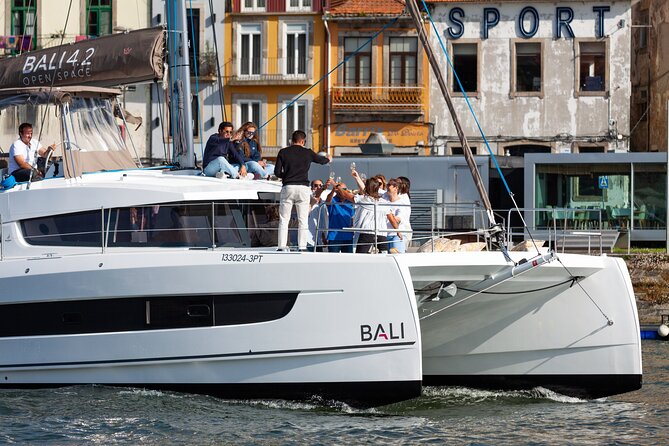
A big reason this cruise gets strong ratings is how much it compresses. In two hours, you get views of major icons without buying tickets for multiple sites or climbing your way up to each viewpoint.
Here are the standout landmarks you’ll see during the sailing loop, and what to look for:
Arrábida Bridge and the Porto–Gaia connection
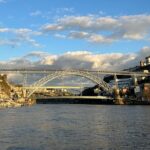
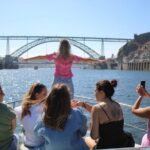
The Ponte da Arrábida is an arch bridge that connects Porto to Vila Nova de Gaia. It was built in the 1960s and, at the time, was noted for having a very large reinforced concrete arch. Even if you’re not reading the technical details, it’s a clear visual marker that helps you understand how the cruise ties the two sides of the river together.
You can also read our reviews of more wine tours in Porto
Clérigos Tower without the climb
The Torre dos Clérigos (designed by Nicolau Nasoni) rises above the city at more than 75 meters. It’s the kind of tower you spot instantly once you know where to look. From the water, it becomes part of the skyline rather than a destination.
The tower is famous for a steep climb (225 steps) if you ever visit it on land, but on this cruise you’re mainly absorbing it as a landmark from below.
Ribeira Square and the river’s old heart
Praca da Ribeira is one of Porto’s oldest areas, tied to the medieval UNESCO core. From the cruise, it reads as a compact river district—commerce by the water, and a constant flow of activity in the historical center.
One charming detail: there’s a tribute to the Ribeira’s Duque, a local figure remembered for saving people from drowning. Even if you’re just seeing the waterfront from the river, it gives the area more character than a postcard.
Your 2-Hour Flow: Stop by Stop, What Each Place Means
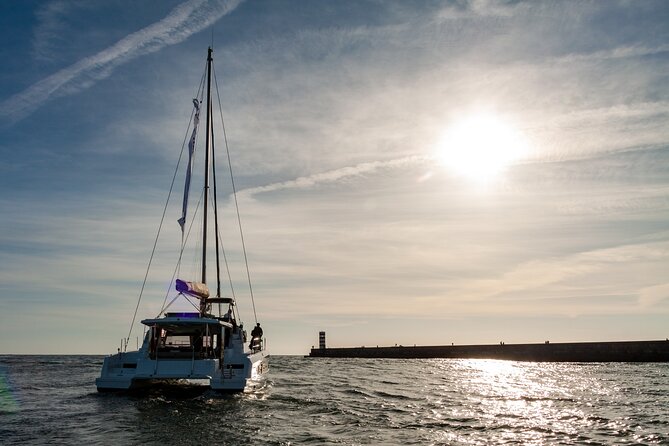
This cruise moves through a set route with major sightseeing points. You won’t be doing museum hopping for hours; think of this as a structured circuit where the sights are there for you to watch and photograph.
1) Douro River and the estuary corridor
You start in the river environment and get the views framed around the classic wine-and-trade storyline. This is where the cruise focuses on the river system: bridges, traditional boat work, and the protected estuary area with wildlife potential.
2) Douro Marina (a modern base for river life)
You’ll see Douro Marina, a public dock that opened in February 2012. The investment is significant, and the marina has the capacity for up to 300 vessels (with floating equipment making up part of the build). It also has services like boat repair and maintenance, plus shops and restaurants.
Why you’ll care: you’re departing from a working-looking hub, so the whole experience feels grounded rather than tourist-only.
3) Afurada’s fishing identity
You pass Centro Interpretativo do Patrimonio da Afurada. Afurada sits on the edge of the Douro near where it meets the sea, and it’s historically linked to fishing. Even if the stop itself is more about what you see than a long visit, it helps you understand why Gaia’s waterfront isn’t just wine—it’s also everyday coastal life.
4) Ponte da Arrábida viewpoint framing
The bridge acts like a moving “photo frame.” From the water, it gives you a sense of scale and direction: you can track where Porto’s side ends and Gaia’s side begins.
5) Museu do Carro Electrico and the Massarelos building vibe
You’ll glide past the Tram Museum building (Museu do Carro Electrico). It preserves a collection of electric cars and related transport history, housed in a former thermoelectric plant from 1915. If you ever visit later, the museum is known for a time-machine feel: wood-and-iron interiors and seat backs that can pivot to match travel direction.
On the cruise, you mainly get the external city scenery, but it’s a neat stop marker because it mixes industrial history with the river setting.
6) Igreja da Confraria das Almas do Corpo Santo (tiles and structure)
This church is built in 1776 with a distinct tiled façade. From the river, churches like this are easier to appreciate by shape than by details—so focus on the overall composition: towers, pilasters, and that long façade line.
7) Passeio das Virtudes and vertical terraces
The Virtudes Municipal Park is described as vertical—built on terraces down the slope. The payoff is views: you can often look toward Alfândega, the Douro, and across to Vila Nova de Gaia. This is the kind of place where you’d want good light for photos, because the terraces create strong lines.
8) Torre dos Clérigos (the tower you can’t miss)
Again, the tower is a visual anchor in Porto. If you like skyline spotting, this is one of the cruise’s easiest “this is where we are” cues.
9) Cais de Gaia and the port-wine waterfront
This is the emotional center for port lovers. Cais de Gaia is famous for port wine because the river port historically operated here, with Rabelo boats anchoring and unloading barrels for aging in Gaia cellars. After refurbishment work finished in 2003, the quay became more leisure-friendly and earned an award for enhancement of public space.
This is also where about 30 wine cellars cluster, many offering tours and tastings on land. On the cruise, you’re mostly seeing the waterfront energy and understanding why these places exist.
10) Barcos rabelos as a living symbol
Rabelo boats are traditional Douro vessels that carried barrels when roads and railways weren’t an option. The river used to be rough and treacherous, which is why sailing required experienced crews. You’ll get this story as a context lesson while you watch the river corridor.
11) Jardim do Morro and panoramic framing
Jardim do Morro sits near Luís I bridge. It’s known for a greener patch and a belvedere view over Porto and the Douro. On water, it reads as a break in the city texture—one more visual layer.
12) Serra do Pilar viewpoint and monastery geometry
Miradouro Serra do Pilar centers on the monastery of the same name. It’s circular in plan, which is why it looks so distinctive from a distance. It has UNESCO listing status and a long story tied to military use during the early 1800s.
From the cruise, look for the circular form and how it’s set into the slope above the water.
13) Dom Luís I Bridge (the postcard structure, now in motion)
Luís I Bridge is the main bridge between Porto and Gaia, metal, double-decked, and built with Théophile Seyrig’s design (after King Louis I). It’s about 395 meters long and remains one of Porto’s most emblematic viewpoints.
Because you’re on the river under it and along it, the bridge feels less like a static photo and more like a moving part of the city.
14) Reserva Natural Estuario do Douro
The estuary nature reserve covers more than 66 hectares and includes areas near Afurada like Cabedelo and São Paio Bay. Birds are the headline attraction, helped by the East Atlantic migratory route. The area can be visited via a suspended walkway, but on this cruise you’re seeing it from the water and learning what makes it special.
15) Passeio Alegre Garden at the water’s meeting
Finally, you pass Jardim do Passeio Alegre, a late 19th-century garden designed by Émile David. It sits where Douro waters meet the Atlantic. It’s also tied to named features like the granite turtle fountain by Nicolau Nasoni and a bandstand used for occasional events.
This is a good finish for the route because it reinforces the river-to-sea sense of place.
Sunset vs Daytime: Timing, Weather, and Comfort Tips
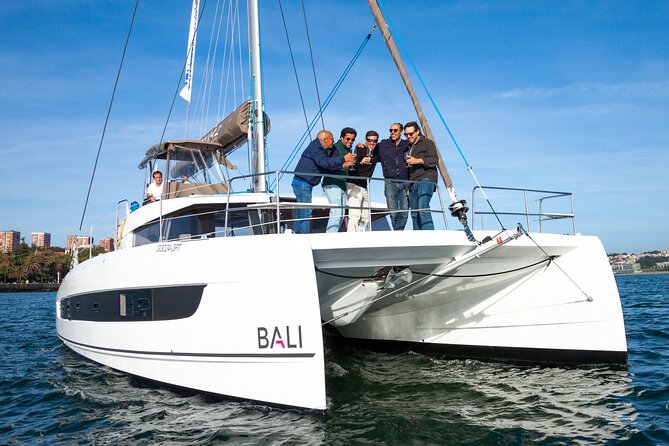
You’re choosing between daytime sightseeing and sunset mood. Either works, but the “sunset” promise depends on what the sky does.
Here’s what I’d plan for based on real-world sailing conditions:
- If it’s overcast, you may miss the full sunset glow even if the cruise is still beautiful.
- If it gets chilly after dark, blankets have been provided on departures that cool down.
- Sails might not be raised every time. Some captains run quietly by motor when conditions call for it, and that still keeps the ride peaceful.
In windy or rainy conditions, the crew may adjust the route or consider heading back early. So if you’re scheduling this as a must-do at a fixed time, build in flexibility.
Price and Value: Is $54.42 for Two Hours Fair?
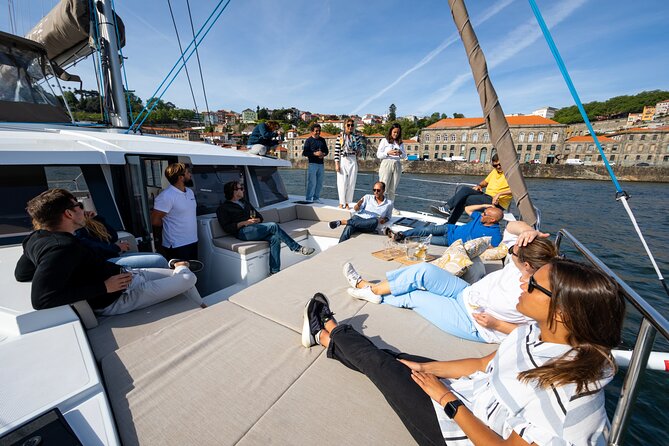
For $54.42 per person, you’re paying for a guided boat experience with Wi‑fi and a glass of port wine included. You’re also getting access to views that are hard to replicate on foot in such a short window, especially the bridge-and-cellar perspectives from the river.
Is it fine dining value? No. This is a city-view ride, not a full meal tour. If you want long narration, you might wish for more verbal history on some departures. But if your priority is spending time on the Douro without the effort and steep walking, the price starts to make sense quickly.
Who Should Book This Cruise (and Who Might Be Happier Elsewhere)
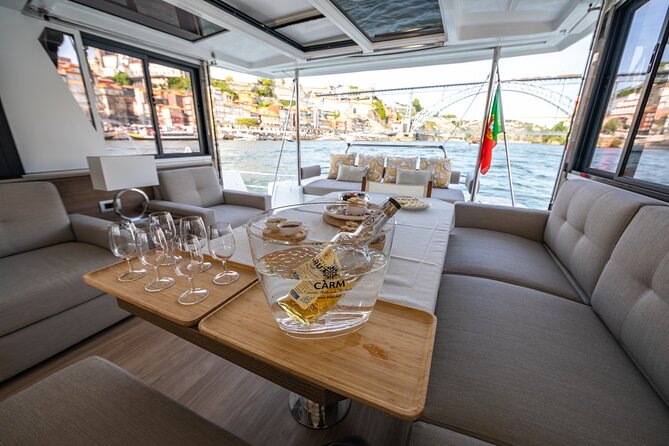
I’d book this if you:
- want a break from Porto’s hills and stairs
- enjoy skyline views and river landmarks
- like port wine enough to want it served as part of the experience
- want a low-stress outing that still feels “special”
I’d be cautious if you:
- expect a big production with nonstop commentary
- really need a sunset moment and you’re traveling during a cloud-heavy period
- are very motion-sensitive, because the cruise can still feel like you’re on open water even with a calm motor ride
Also, note the experience is capped at 58 people, and seating/boat placement is assigned randomly. If you’re counting on a specific boat size for comfort, you can’t guarantee it.
Should You Book This Porto Douro River Cruise With Port Wine?
I’d say yes if your goal is to see Porto and Gaia from the water in a short, easy window—and if a glass of port is your kind of added touch. The best part is how the cruise ties the places together: bridges, churches, the old river trade, and that protected estuary area.
Skip it (or pair it with something else) if you want a deep, long-form guided lecture or if your schedule leaves zero room for weather changes.
If you do book, come to Marina da Afurada with enough time to find the correct check-in spot. One tip from on-the-ground experience: look for the BBDouro staff with their equipment and be ready to go to the indicated pier gate if your ticket details seem vague.
FAQ
How long is the Porto Douro River cruise?
It runs about 2 hours.
Where do I meet for the tour?
You meet at Marina da Afurada, R. da Praia 430, 4400-554 Vila Nova de Gaia, Portugal.
What’s included in the price?
The tour includes Wi‑fi, a glass of port wine, and the boat tour.
What language is the guided part offered in?
The experience is offered in English.
Can I bring food or drinks from outside?
For shared tours, you are not allowed to bring food or drinks from the outside, and the crew will not permit access to the tour.
How big is the group?
This tour has a maximum of 58 travelers.
Is the cruise good for sunset?
It runs as a daytime or sunset option, but it requires good weather, and cloud cover can affect the sunset experience.
What’s the cancellation policy?
You can cancel for a full refund up to 24 hours in advance of the experience start time.
If you want, tell me your travel month and whether you’re doing daytime or sunset, and I’ll suggest what time of day makes the most sense for your priorities.