REVIEW · ISTANBUL
Private Bosphorus Cruise with Luxury Yacht
Book on Viator →Operated by Yacht Cruises: Bosphorus · Bookable on Viator
A Bosphorus cruise turns Istanbul sideways. This private luxury yacht ride lines up Ottoman palaces, signature bridges, and both sides of the city in about two hours, with English guidance and onboard snacks. I love the private yacht vibe—small group, easy pace—and I also love how the route spotlights the European and Asian sides from the water. One thing to consider: transfers aren’t included, so you’ll want to plan how to reach the dock area near public transport.
I liked that the crew kept things relaxed but attentive, and the guide work got real personal. In the reviews, names like Efe and Nur show up again and again for being friendly and helpful, and the sunset factor gets mentioned a lot too. If you’re hoping for museum-level time on land at every stop, you’ll likely want to manage expectations and treat this as a moving viewpoint tour.
In This Review
- Key things to know before you go
- Why a private Bosphorus yacht works so well
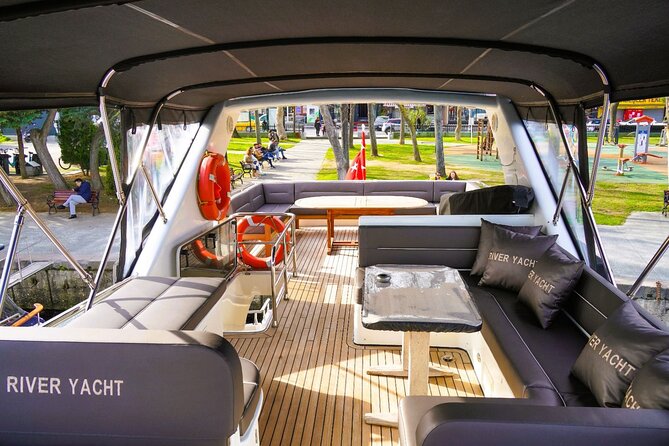
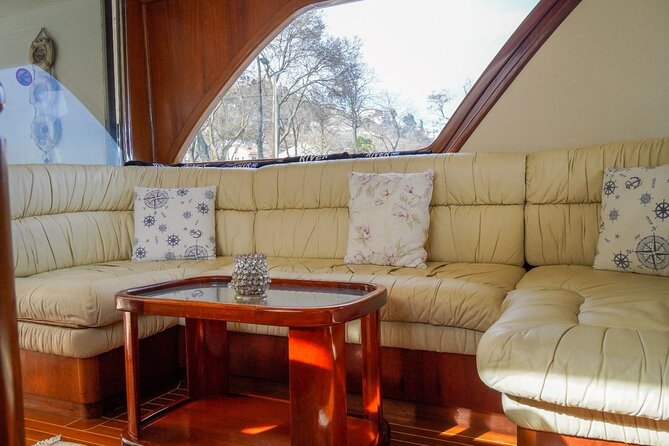
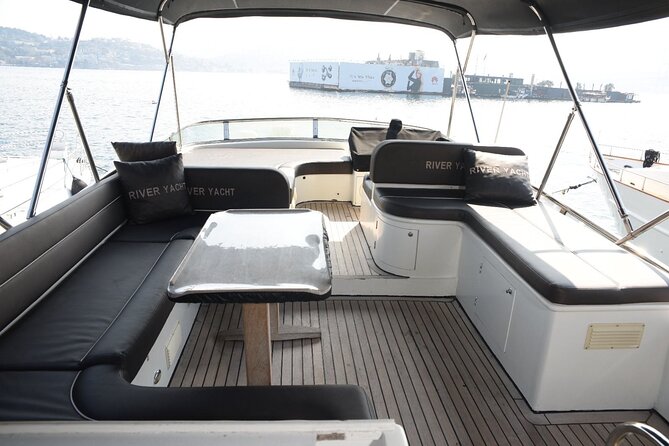
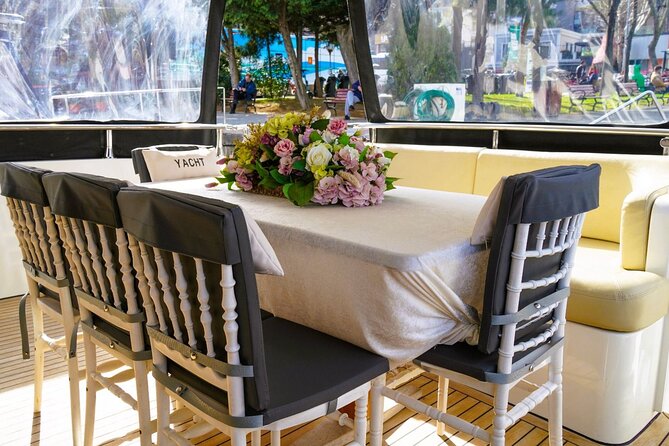
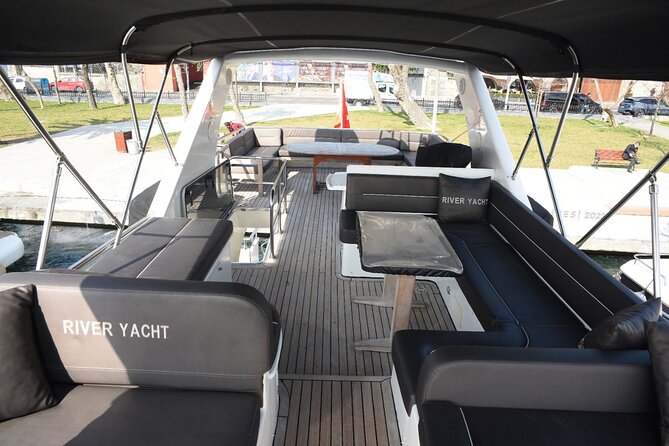
- The onboard experience: luxury feel without the fuss
- Dolmabahçe Palace and Çırağan Palace: the European shoreline begins
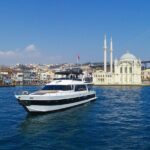
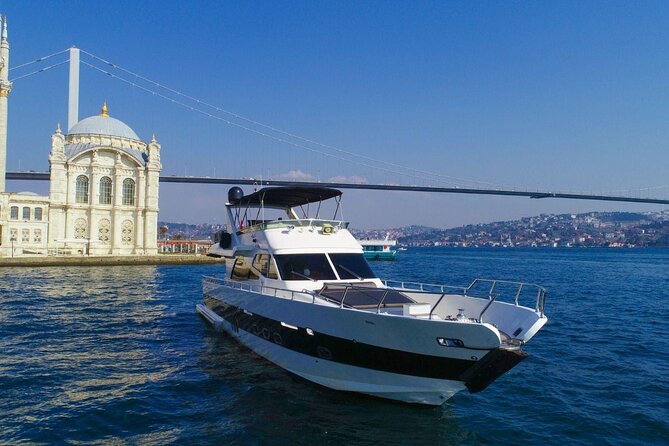
- Ortaköy for the food mood and the Mosque viewpoint
- The bridges: Istanbul’s “two continents at once” feeling
- Fortress time: Rumeli Hisarı and Anadolu Hisarı from the water
- Küçüksu Pavilion and Beylerbeyi: Asian-side elegance in calmer surroundings
- Kız Kulesi (Maiden’s Tower): the romance and the legends
- Topkapi Palace, Galata Bridge, and Galataport: city energy from the water
- Price and value for a group up to 12
- Who should book this cruise (and who might want another plan)
- Should you book this private Bosphorus yacht cruise?
- FAQ
- How long is the private Bosphorus cruise?
- What is the price for the yacht cruise?
- Is the tour private?
- What’s included in the cruise?
- Is transfer service included?
- What language is the tour offered in?
- Is there free cancellation?
Key things to know before you go
- Private group up to 12: you’ll stay with your crew and don’t share the boat with strangers.
- Onboard snacks, tea, and water: you’re not just sightseeing; you’re also taken care of.
- English guidance: helpful for understanding what you’re seeing as the Bosphorus changes scene.
- Sunset-friendly timing: multiple reviews point to a really strong evening atmosphere.
- A long list of landmarks for a 2-hour ride: you’ll see a lot from the water, not from long stops on land.
Why a private Bosphorus yacht works so well
Istanbul can feel like a lot. It’s huge, it’s layered, and it’s constantly asking you to decide what you can squeeze in. This cruise helps because it’s simple: you sit, you look, you learn. The Bosphorus does the moving for you.
What makes this one especially appealing is the private setup. A group up to 12 means you can actually hear the guide, ask quick questions, and move at the rhythm of your own boat time. You’re not stuck in the mass of a big sightseeing bus, and you’re not doing that frantic, step-on-step-off thing.
Then there’s the setting. The Bosphorus is where Istanbul’s geography becomes a story: the city stretches across continents, with palaces and fortresses facing each other across the strait. From a yacht, you get views that are harder to replicate from street level.
You can also read our reviews of more boat tours in Istanbul
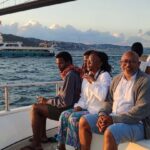
The onboard experience: luxury feel without the fuss
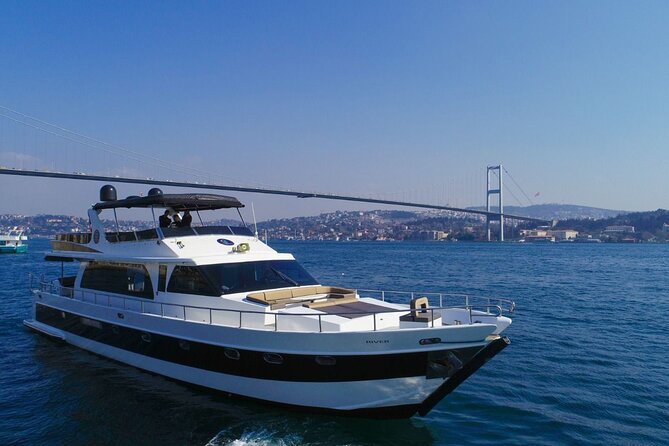
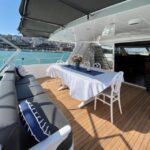
This is booked as a 2-hour private yacht cruise, and that time is part of the value. You’re getting a concentrated slice of the city’s best shoreline scenery without losing half a day to transit and lining up.
Included with the cruise are snacks, tea, and water. That matters more than it sounds. A lot of sightseeing tours sell you the view, but then you’re hungry and trying to navigate Istanbul’s food scene mid-tour. Here, you’re already taken care of, so the mental load stays low.
The reviews also point to a consistently friendly tone. Names like Nur pop up for being kind and helpful, and Efe gets singled out as one of the best guides. One review even notes that Efe guided separately besides the main guide, which tells me you can expect personal attention rather than a rushed monologue.
Practical note: since transfers aren’t included, your start to finish plan depends on how you’re getting to the dock. Still, the experience is listed as being near public transportation, which usually makes life easier.
Dolmabahçe Palace and Çırağan Palace: the European shoreline begins
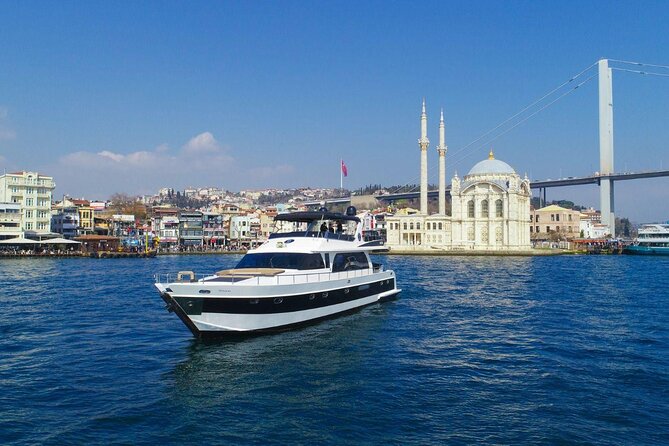
Your cruise starts with the Ottoman waterfront powerhouses on the European side—first Dolmabahçe Palace, then Çırağan Palace.
Dolmabahçe Palace is a major Istanbul landmark in Beşiktaş, completed in 1856 after a long construction period during Sultan Abdülmecid’s reign. The palace’s style is a mix of Neoclassical and Baroque, and that mix shows on the exterior and in how grand the whole complex feels. Even if you don’t step inside on this cruise, you’ll still get a sense of scale from the water. For me, that’s the best use of a yacht: the shoreline turns architecture into something you can actually measure with your eyes.
Next comes Çırağan Palace, also tied to Sultan Abdülaziz and famous for its luxury association. The story includes a fire in the 1910s and later restoration, and today it runs as a luxury hotel. From the cruise, you’ll see why this stretch of the Bosphorus became a prestige address. The waterfront is lined with that “royal” energy, and the boat perspective makes it feel less like a postcard and more like a real place you’re passing by.
Drawback to keep in mind: because the cruise is only about two hours, you won’t linger for long photo sessions. Plan to shoot quickly and keep moving.
Ortaköy for the food mood and the Mosque viewpoint
When the route reaches Ortaköy, the whole tone changes. This is a neighborhood on the Bosphorus shore known for cafés, restaurants, art galleries, and handicrafts. There’s also the Ortaköy Mosque, a key landmark with a famous view over the water.
Ortaköy is also where the street-food culture meets the scenic postcard. The info here highlights kumpir (stuffed baked potatoes) and waffles as crowd favorites. Even if you don’t stop to eat during the cruise, this is useful context. You’ll understand why the promenade and small streets around the area are so popular after you’ve seen it from the yacht.
Why this stop works on a boat: mosque views and waterfront life are easiest to appreciate from water because it gives you depth—shoreline buildings, the strait, and the neighborhoods all layer together.
Possible consideration: if you’re traveling at a time when it’s very bright, photography can be tricky due to glare on the water and reflective building surfaces. Bringing sunglasses and keeping your camera lens clean will help.
The bridges: Istanbul’s “two continents at once” feeling
A big part of this cruise experience is how it frames Istanbul’s geography through bridges. You’ll see both of the major Bosphorus crossings named in the route.
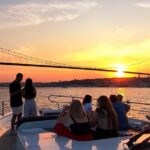
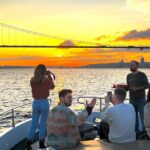
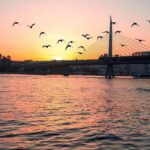
First is the Bosphorus Bridge, officially the 15 July Martyrs Bridge. Opened in 1973, it was the first bridge to connect the European and Asian sides. At night, the illuminated look becomes a star attraction, and that’s one reason sunset timing shows up in the reviews.
Then you’ll also pass the Fatih Sultan Mehmet Bridge (FSM Bridge), opened in 1988. It’s named after Mehmed the Conqueror. The cable-supported design is the kind of structure you can’t fully appreciate from the roadside because you lose the scale of the span. From a yacht, you get a better sense of how the bridge slices across the strait and how it frames the skyline.
Practical advice: if you care about photos, keep an eye on which side of the yacht faces the bridge at each moment. Small angle changes can make the difference between a wide shot that includes the cable patterns and a tight shot that only catches part of the view.
You can also read our reviews of more private tours in Istanbul
Fortress time: Rumeli Hisarı and Anadolu Hisarı from the water
This cruise also includes two fortresses that belong to Istanbul’s long military timeline: Rumeli Hisarı on the European side and Anadolu Hisarı on the Asian side.
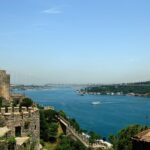
Rumeli Hisarı (Rumeli Hisarı) was built in 1452 under Sultan Mehmed II, right before the conquest of Constantinople. The main job was controlling the Bosphorus and preventing naval aid to the Byzantine Empire. From the water, fortress walls and towers feel less like ruins and more like strategic engineering. You’ll likely get a stronger “why here?” reaction than you would from standing on a sidewalk.
On the Asian side, Anadolu Hisarı was built in 1395 by Ottoman Sultan Bayezid I. Again, the purpose links to control of the Bosphorus and blocking enemy ships. It’s also described as a quieter, more charming spot around the fortress. On a yacht, you won’t get that walking atmosphere, but you will get the scenic calm that makes these structures sit in your mind after the cruise ends.
Quick consideration: fortresses are mostly about geometry and defensive positioning. If you’re the type who needs to go inside to feel satisfied, this might leave you wanting more. But as a visual context-builder, it’s excellent.
Küçüksu Pavilion and Beylerbeyi: Asian-side elegance in calmer surroundings
The route continues across to the Asian side with stops that feel more like leisure architecture than strict fortress power.
Küçüksu Pavilion (Küçüksu Kasrı) is in Beykoz and built in 1857 by Sultan Abdülmecid. It’s Neo-Baroque in style, with ornate interior and exterior details noted in the description. It originally served as a summer residence. From the Bosphorus, pavilions make more sense than they do in passing. You can sense the way the Ottomans placed these spaces to enjoy the water view.
Then there’s Beylerbeyi, famous for Beylerbeyi Palace, built in the 19th century by Sultan Abdülaziz. Like Dolmabahçe and Çırağan, it fits the broader pattern of Ottoman waterfront prestige. The palace complex is described as having elegant interiors and large gardens, plus big Bosphorus views. Even without stepping on land, the yacht viewpoint gives you the relationship between building and shoreline.
One of the strengths of including these two is balance. You’re not just doing fortresses and bridges. You also get the softer side of Ottoman waterfront design—places meant for residence, relaxation, and looking out over the water.
Kız Kulesi (Maiden’s Tower): the romance and the legends
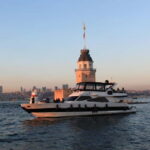
If you’ve seen photos of Istanbul’s skyline, you’ve probably seen Kız Kulesi (Maiden’s Tower). In this itinerary, it’s specifically included as a stop and also tied to the legend-heavy identity of the city.
The tower sits on a small islet off Salacak, at the entrance to the Bosphorus. Historically, it’s been a lighthouse, a watchtower, and even a quarantine station. Today, it operates as a restaurant and café, so it has that dual life: history plus modern use.
What I like about including it on a yacht cruise is the separation of scale. From land, Maiden’s Tower can feel like a single focal point in a crowded scene. From the water, it sits in its proper context—straddling the entrance to the Bosphorus and marking the divide between European and Asian views.
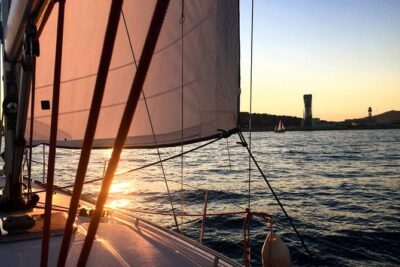
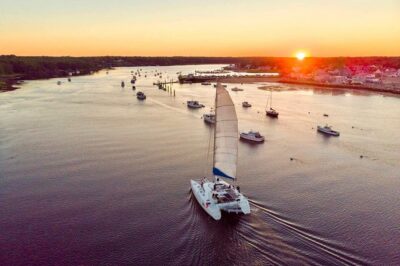
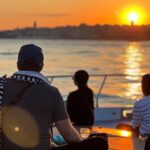
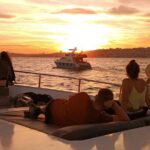
Sunset factor: several reviews mention sunset as a highlight. If you can, aim for later timing so the water turns gold and the skyline becomes less flat.
Topkapi Palace, Galata Bridge, and Galataport: city energy from the water
The last part of the route leans back toward the big-city feel, with sights that connect the Bosphorus story to Istanbul’s wider waterfront districts.
Topkapi Palace is on the historic peninsula in Fatih and served as Ottoman residence for nearly 400 years after being built in 1460 by Sultan Mehmed II. It’s known for courtyards, rooms, and major collections. From a boat, you won’t tour the inside on this kind of cruise time, but you can appreciate why the palace mattered as the seat of power. It sits where land and sea roles overlap.
Then you’ll reach Galata Bridge, spanning the Golden Horn between Eminönü and Beyoğlu/Galata. The current bridge was completed in 1994, and it’s described as having a roadway on top plus pedestrian walkways below. The lower deck is lined with fishermen, which gives the scene a working-waterfront look even in a tourist-heavy city.
Finally, Galataport appears as a modern waterfront development in Karaköy, described as completed in 2021 and including a cruise terminal. It blends luxury shopping, dining, entertainment, and office spaces with museums, art galleries, and open-air areas. This stop is useful because it shows Istanbul now—still Ottoman-rooted, but also actively reworked for today’s maritime tourism.
Possible drawback: because this part mixes historic and modern landmarks, the “feel” can shift quickly. If you’re hoping for a single mood the whole ride, you might find the second half changes pace. Still, that variety is kind of the point of Istanbul from the water.
Price and value for a group up to 12
At $340.56 per group for up to 12 people, this is one of those pricing setups that gets more reasonable the fuller your group is.
If you fill the boat with, say, 10 to 12 people, your per-person cost drops a lot compared to the usual per-seat sightseeing model. Even with fewer people, the private nature and onboard inclusions matter: you’re paying for a 2-hour private luxury yacht experience plus snacks, tea, and water. The fact it’s English-supported also helps because you’re not just watching buildings float by—you’re getting context for what you’re seeing.
One value-check: there’s no transfer service. That doesn’t make the cruise “bad,” but it does mean your all-in cost depends on how you get to the dock. If you’re staying close and can use public transport, it stays a strong deal. If you’re far and need taxis for everyone, the math shifts.
Who should book this cruise (and who might want another plan)
This is a good match for you if:
- You want a private Bosphorus experience without spending all day planning.
- You care about seeing both European and Asian sides in one shot.
- You like getting some guided context while you relax onboard.
- Sunset matters to you and you like being on the water when the light changes.
This might not be perfect if:
- You want long stops inside major sites like palaces. On a 2-hour cruise, you’ll mostly be viewing from the water.
- You need a package that includes door-to-door pickup. Transfers aren’t included here.
Should you book this private Bosphorus yacht cruise?
Yes, I’d book it if you want an efficient, scenic Istanbul highlight that feels premium but stays low-stress. The strongest reasons are practical: a private group up to 12, a real 2-hour time window, and onboard snacks/tea/water so you’re not fighting hunger during the views. Add the repeated praise for guides like Efe and helpers like Nur, plus the clear pattern of sunset being a highlight, and this cruise starts to look like money well spent.
If you’re the type who plans around logistics, just budget for getting yourself to the dock since transfers aren’t included. Once you handle that, you’ll get exactly what makes the Bosphorus special: palaces, bridges, fortresses, and the sense that Istanbul is literally two continents sharing one shoreline.
FAQ
How long is the private Bosphorus cruise?
It runs for about 2 hours.
What is the price for the yacht cruise?
It costs $340.56 per group, up to 12 people.
Is the tour private?
Yes. It’s a private tour/activity, so only your group participates.
What’s included in the cruise?
The cruise includes the 2-hour private yacht ride, plus snacks, tea, and water.
Is transfer service included?
No, transfers are not included.
What language is the tour offered in?
It’s offered in English.
Is there free cancellation?
Yes. You can cancel up to 24 hours in advance for a full refund.