REVIEW · LISBON
Lisbon – Daylight or Sunset on a Vintage Sailboat
Book on Viator →Operated by Angelo Oliveira - Furanai Sailboat Tours · Bookable on Viator
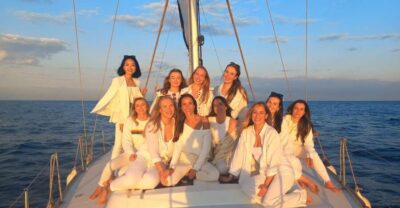
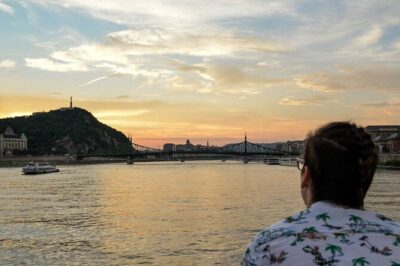
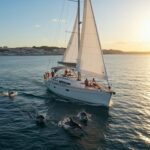
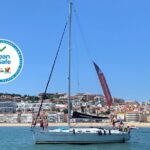
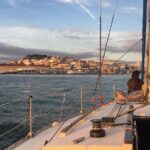
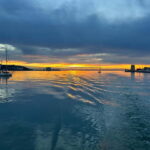
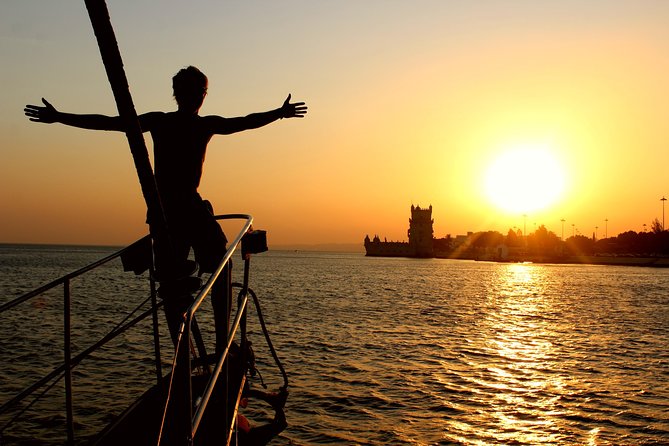
A sunset sail on the Tagus feels like Lisbon slowing down. This 2-hour vintage sailboat ride is a low-key way to see the big sights from the water, with your skipper calling out what you’re passing while you sip white and rosé wine and snack on cheese and charcuterie.
What I like most is the small group size (max 12), which keeps the vibe calm and personal instead of tour-chaos. I also like that the crew points out landmarks as you go, without turning it into a lecture.
One thing to consider: the meeting point can be a little tricky to spot the first time, and if you want maximum quiet service, aim to sit where you can hear the skipper clearly.
In This Review
- Key points
- Why a vintage sailboat on the Tagus is a smart Lisbon move
- Price and value: what $66.38 buys you in real terms
- Getting to the boat: finding Clube de Padel at Doca de Santo Amaro
- From the April 25 Bridge to Belem: the Lisbon monuments you’ll actually see
- The April 25 Suspension Bridge
- Padrão dos Descobrimentos: Portugal’s Age of Discovery in stone
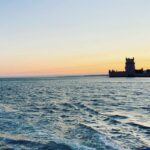
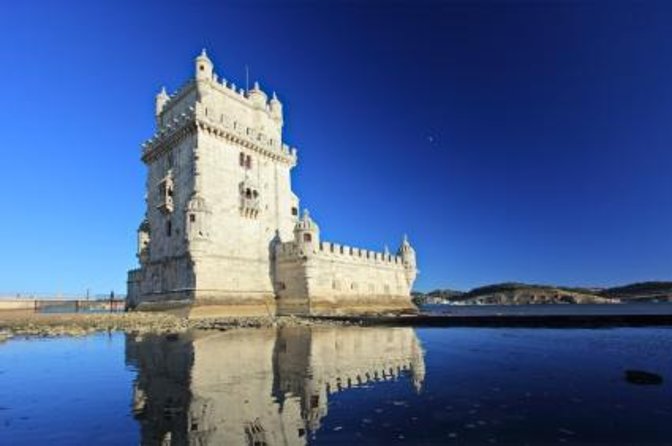
- A XVI-century fortress guarding the harbor entrance
- MAAT and the Electricity Museum: modern Lisbon hits between the classics
- MAAT: art, architecture, and technology in one waterfront statement
- Museu da Electricidade: energy history made hands-on (in spirit)
- Cristo Rei and Almada: the view across the river that feels cinematic
- Cristo Rei: a blessing above the southern bank
- Almada’s riverfront: seafood houses and a wide-angle Lisbon view
- Praça do Comércio at golden hour: the finale that makes sense
- On-board vibe: small group comfort, blankets, and a snack routine
- Who should book this daylight or sunset sail?
- Should you book this vintage sunset cruise?
- FAQ
- How long is the Lisbon vintage sailboat tour?
- What does the tour cost?
- Is the tour offered in English?
- What’s the group size?
- Where do I meet for the tour?
- What’s included on board?
- Is good weather required?
- What is the cancellation policy?
- Is the tour suitable for most people?
Key points
- Vintage boat comfort: room to stretch out with bean bags/chairs and laydown spots reported on board
- Real “views first” route: you glide past Belem, the April 25 Bridge, and Praça do Comércio on the Tagus
- Food and wine that fit the timing: cheese/charcuterie with white and rosé for a sunset-perfect snack setup
- Smaller-than-average attention: the skipper keeps tips and landmark notes on your schedule, not theirs
- Weather matters: good conditions are required, with options if the sail gets moved or refunded
Why a vintage sailboat on the Tagus is a smart Lisbon move
Lisbon has a talent for showing you its best angles without effort. But the real cheat code is water. From the Tagus, Lisbon’s monuments stop looking like photos and start looking like places you could actually live next to.
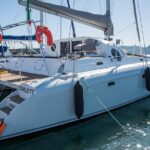
This sail works because it’s designed for the river experience. You’re not herded onto a big sightseeing vessel. Instead, you’re on a vintage sailboat with a small group, so conversation stays easy and the ride feels more like a shared outing than a ticket number.
And yes, the sunset part is the obvious reason to go. But it’s also about light at street level—after you’ve seen how the buildings catch sun and shadow from the river, you’ll understand the city in a different way when you go back on land.
If you’re trying to choose between a party boat and something calmer, this one leans peaceful. Think sun on your face, wind in your hair, and a route that makes it easy to point your camera in the right direction without standing shoulder-to-shoulder with strangers.
You can also read our reviews of more boat tours in Lisbon


Price and value: what $66.38 buys you in real terms
At about $66.38 per person, this isn’t the cheapest activity in Lisbon, but it’s also not trying to compete with discount museum tickets. You’re paying for three things you can’t easily DIY:
- A boat experience (2 hours) on the Tagus
- A small-group setup (max 12) that keeps it personal
- On-board wine plus cheese and charcuterie
That last part matters more than it sounds. For a sunset sail, food and drink that are already taken care of means you don’t spend your evening hunting for tapas, then sprinting back to catch dusk. The snack rhythm fits the timing: you’re fed while the view keeps getting better.
One caution from the overall feedback: wine service can be light compared with what some people hope for on a 2-hour cruise. If you’re coming with a big party-drink expectation, you may feel a bit short. If you treat it as “a glass or two with a view,” it lands much better.
Getting to the boat: finding Clube de Padel at Doca de Santo Amaro
Meeting point is Clube de Padel, Doca de Santo Amaro, 1350-353 Lisboa, Portugal. It’s described as near public transportation, which is helpful if you don’t want to mess with parking.
The practical tip here is simple: give yourself a few extra minutes to locate the exact dock area. One downside people flagged is that the meeting point isn’t always straightforward on first arrival. Lisbon docks can look similar from street level, and the “right place” is often more about spotting the boat/crew than finding a big sign.
Once you’re there, the format is easy: it starts at that meeting point and ends back there. No long puzzle at the end of your sunset—just cruise, sunset, and back to where you began.
From the April 25 Bridge to Belem: the Lisbon monuments you’ll actually see
A big reason this sail gets high marks is the route. You don’t just drift past generic waterfront. You pass major Lisbon landmarks that are recognizable fast—even if you’ve never been to the city before.
The April 25 Suspension Bridge
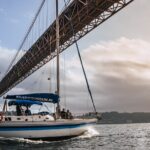
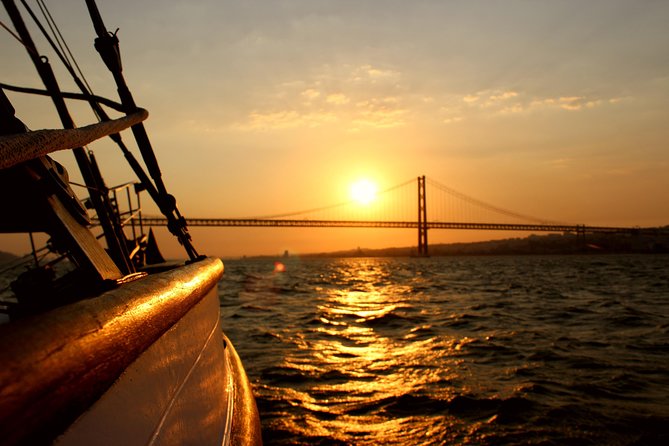
Early on, you get the April 25 suspension bridge, one of Lisbon’s most notable river crossings. It spans the Tagus at the narrowest point, and from the water you get a sense of scale that you don’t get from the road.
Why it’s worth seeing from the deck:
- You can appreciate the structure instead of just crossing it.
- It frames Lisbon like a giant picture border, great for photos without climbing hills.
You can also read our reviews of more evening experiences in Lisbon



Padrão dos Descobrimentos: Portugal’s Age of Discovery in stone
Next is the Padrão dos Descobrimentos on the Tejo estuary side. It’s a bold, imposing monument built to celebrate the 15th and 16th-century explorers who shaped Portugal’s maritime power.
From a sail, it lands differently than it does on land. You see it as part of a bigger river story—ports, routes, and the geography that made exploration possible. If you’ve been to a few museums already, this is a nice visual reset.
A XVI-century fortress guarding the harbor entrance
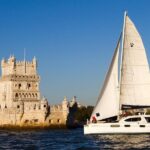
You also pass a 16th-century fortress built to defend Lisbon’s harbor entrance. The key value here is perspective. Forts are usually described as “strategic,” but from the water you can actually feel what that strategy means: control of who enters and how.
This stop is especially good if you like your sightseeing practical. You’ll look at the fortress and think, okay, that view from the river would have been worth protecting.
MAAT and the Electricity Museum: modern Lisbon hits between the classics
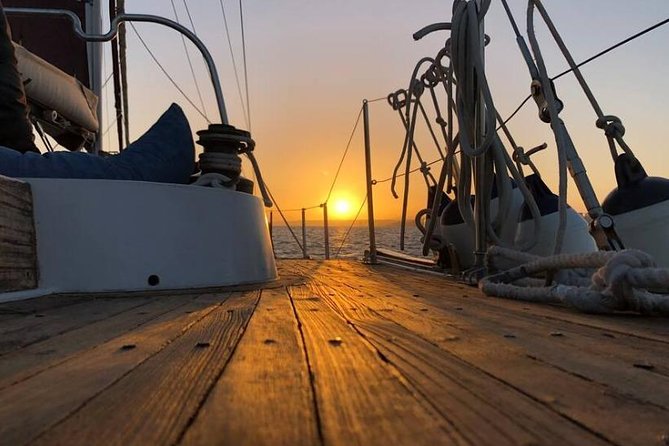
Not every river cruise makes room for Lisbon’s newer creative energy. Here, you get a modern/industrial stretch that keeps the sail from feeling like only one era.
MAAT: art, architecture, and technology in one waterfront statement
The MAAT cultural project focuses on art, architecture, and technology, with exhibitions by contemporary artists and thinkers. From the river, the museum reads as an object in motion—part architecture, part viewpoint.
Even if contemporary art isn’t your main thing, MAAT is a useful stop because it shows Lisbon isn’t only nostalgia. The Tagus waterfront is doing current-day creative work too.
Museu da Electricidade: energy history made hands-on (in spirit)
Nearby is the Museu da Electricidade, a cultural center built around the evolution of energy, using a museum-of-science-and-industrial-archaeology approach.
What I like about including it on a sail: it breaks the “just monuments” rhythm. Lisbon from the water is beautiful, but it can become repetitive if all you see are stone symbols. This gives you something different to notice as you glide along.
Possible drawback: these modern waterfront stops are more about noticing form and placement than about spending time inside. If you want hands-on exhibits, plan to come back on land separately.
Cristo Rei and Almada: the view across the river that feels cinematic
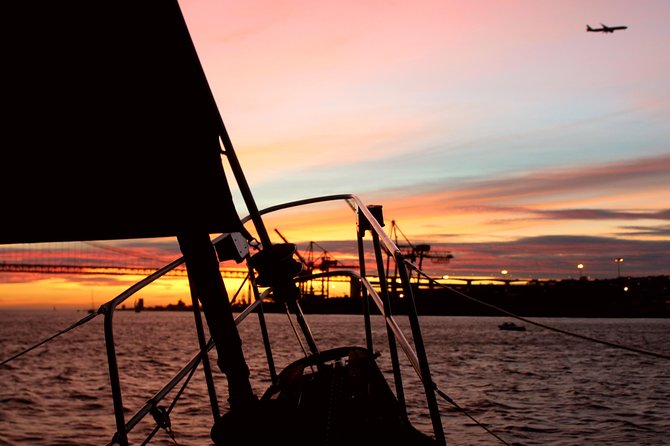
At some point, the sail pivots into the broader estuary experience. This is where the river opens up and the city stops hugging the shoreline.
Cristo Rei: a blessing above the southern bank
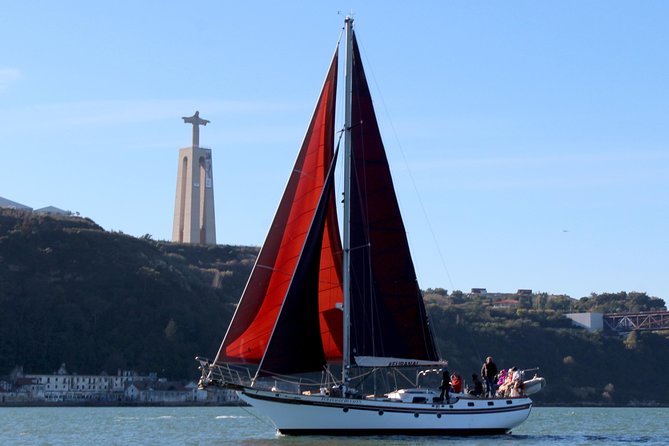
You’ll see Cristo Rei, the statue of Christ on the southern banks of the Tejo estuary, with arms raised. It was inaugurated in 1959, and it’s tied to a post–World War II gratitude story for Lisbon’s survival.
From the boat, it’s striking because it’s tall and distant enough to feel like a landmark you can aim for. It also works as a natural “photo moment” when the light starts shifting toward sunset.
Almada’s riverfront: seafood houses and a wide-angle Lisbon view
You’ll also pass the Almada riverfront. Almada is reachable with a ferry ride from Lisbon’s Cais do Sodré terminus, and it’s known for traditional seafood houses (marisqueiras) right by the boat area.
This is where you can understand why Lisbon’s dining scene is so tied to the water. You get glimpses of that riverside restaurant strip, while still enjoying the larger panorama across the Tagus.
If you’re the type who likes to connect meals to geography, this will click. The city doesn’t feel random anymore. It feels like it’s arranged around food, trade, and water routes.
Praça do Comércio at golden hour: the finale that makes sense
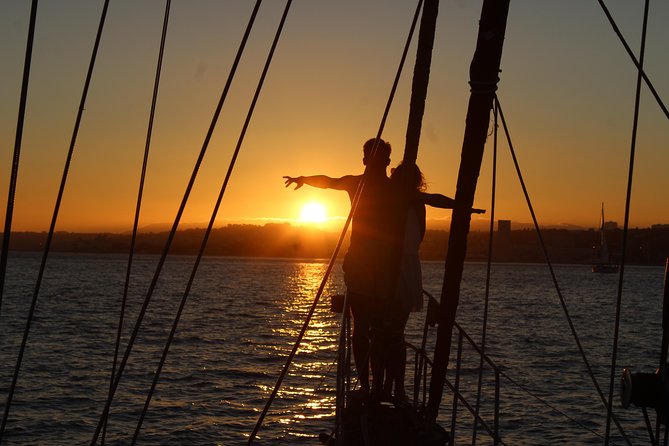
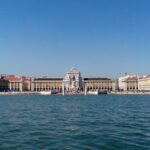
Most sails tell a story with a start and end point. This one makes the ending feel logical: you finish with Praça do Comércio, Lisbon’s grandest plaza, opening out onto the Tagus.
You’ll see the yellow Pombaline architecture on three sides and the focal point of the Arco da Rua Augusta. From the river, this area is all about geometry and scale—big open space, straight lines, and a skyline that feels like it’s been built for wide shots.
Why the timing matters:
- If you catch it at sunset, the plaza becomes a soft-lit stage instead of a harsh daytime landmark.
- The river reflection (when conditions are right) helps your brain “lock in” where everything is in relation to the rest of Lisbon.
Practical note: as the evening cools, wind on the water can feel sharper than you expected. Bring a light layer even if Lisbon has been warm earlier.
On-board vibe: small group comfort, blankets, and a snack routine
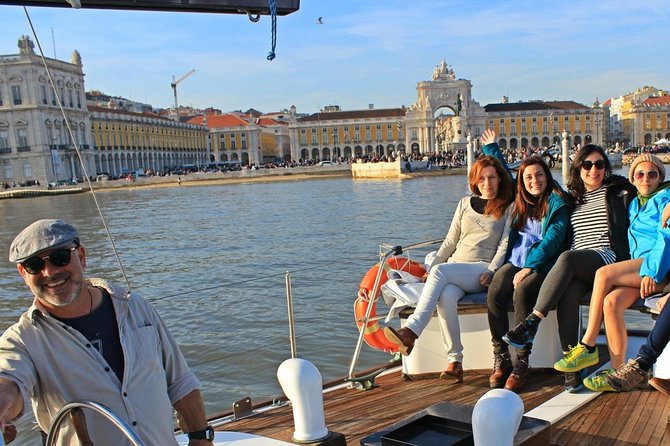
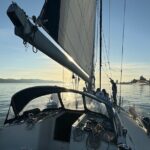
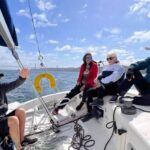
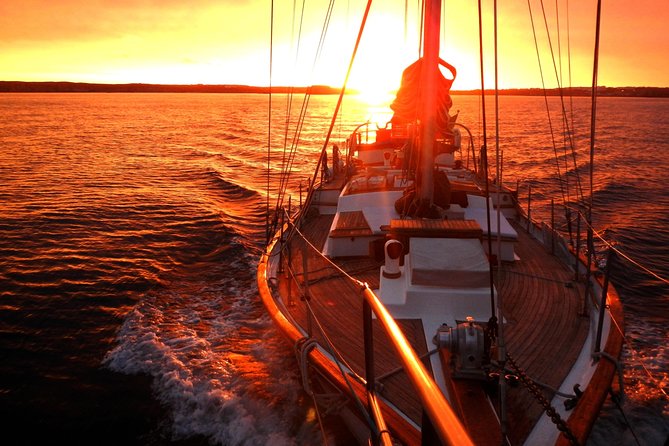
A vintage sailboat isn’t a modern yacht. It’s slower. It’s windier. It’s also more characterful. People consistently love how comfortable the space feels for a small group.
What you can expect on board, based on the experience details:
- Room to sit comfortably, including bean bag/chair areas and laydown options reported on board
- A relaxed service style, where the crew handles the wine and the cheese/charcuterie
- The overall feeling that you can hear each other and still enjoy the scenery without constant crowd noise
Some cruises are cool enough that blankets are provided, which is a great little practical touch. Lisbon evenings near the river can surprise you.
Service pace is another factor. Some people love the calm, attentive approach—wine and snacks arrive as part of the glide. A few also felt wine pours could be a bit more generous for a 2-hour sail, which comes down to expectations. If you want a long-drink experience, this is more “sunset sailing with a drink” than “open bar party.”
Who should book this daylight or sunset sail?
This is a great fit if you:
- Want a romantic or low-key experience that isn’t a party boat
- Prefer seeing Lisbon by water first, not by jumping between stops on land
- Travel as a couple, small group, or solo traveler and value calm interaction
- Like structured sightseeing notes but don’t want constant explanations
It’s less ideal if you:
- Want lots of inside time at museums or expect a deep dive into exhibits (this is about the river view)
- Are very sensitive to cold evening wind (you’ll be on the water, and it can get chilly)
- Expect heavy wine refills like a nightlife cruise
Should you book this vintage sunset cruise?
If you want one memorable evening in Lisbon that feels authentically local—river, wind, a small boat, and a view that makes the city click—this is an excellent choice. The combination of small-group sailing and on-board wine with cheese and charcuterie is exactly what makes it feel like more than just transportation from point A to point B.
My decision rule is simple:
- If your idea of a perfect night is peaceful, scenic, and photo-friendly, book it.
- If you need big nightlife energy or expect an unlimited drink situation, you’ll probably feel slightly underwhelmed.
Also, keep an eye on weather. This activity requires good conditions. The good news: when weather cancels the sail, you’re offered a different date or a full refund, so you’re not left stuck.
FAQ
How long is the Lisbon vintage sailboat tour?
It lasts about 2 hours.
What does the tour cost?
The price is $66.38 per person.
Is the tour offered in English?
Yes, it’s offered in English.
What’s the group size?
The tour has a maximum of 12 travelers.
Where do I meet for the tour?
The meeting point is Clube de Padel, Doca de Santo Amaro, 1350-353 Lisboa, Portugal.
What’s included on board?
You’ll have white and rosé wine along with cheese and charcuterie.
Is good weather required?
Yes. The experience requires good weather. If it’s canceled due to poor weather, you’ll be offered a different date or a full refund.
What is the cancellation policy?
Cancellation is free up to 24 hours in advance for a full refund.
Is the tour suitable for most people?
It states that most travelers can participate.
If you tell me your travel month and whether you prefer daylight or a true sunset, I can suggest which timing usually works best for comfort on the river.