REVIEW · LANZAROTE
Whale & Dolphin Observation on Silent Catamaran with Hydrophone
Book on Viator →Operated by WeWhale · Bookable on Viator
Silent sea days beat the usual engine noise. This whale and dolphin trip in Lanzarote takes you out from Puerto Calero on a 100% silent, emission-free catamaran, then adds a hydrophone so you can hear what the animals are doing when the conditions line up. It’s a simple idea with a big payoff: less disturbance from the boat, more focus on what’s happening in the water.
Two things I’d call out as the big wins: the boat is built for a maximum of 12 people, so you’re not packed in, and the crew keeps things informative while you snack and sip on board. One consideration: even though the hydrophone is on board, it may not be used the whole time—think “when the animals are vocal,” not “all cruise long.”
In This Review
- Key Things To Know Before You Go
- Why a Silent Catamaran Makes This Feel Different
- The Route From Puerto Calero: What the 9:00 AM Start Looks Like
- On Board With a Max of 12: Space, Attention, and Comfort
- The Hydrophone Explained Simply: What You Can (and Can’t) Expect
- Whale and Dolphin Spotting at Responsible Distance
- Weather, Wind, and What to Wear for a Cold Sea Breeze
- Snacks, Drinks, and the Pace Between Sightings
- Conservation Angle: Why WeWhale Matters Here
- Price and Value: Is $114.65 Worth It?
- Who This Tour Fits Best
- Should You Book This Whale and Dolphin Silent Catamaran?
- FAQ
- How long is the whale and dolphin observation trip?
- Where is the meeting point?
- What time does the tour start?
- How many people are on the catamaran?
- Is the catamaran silent and emission-free?
- Will the hydrophone be used during the whole trip?
- Are snacks and drinks included?
- What happens if the weather is bad?
Key Things To Know Before You Go
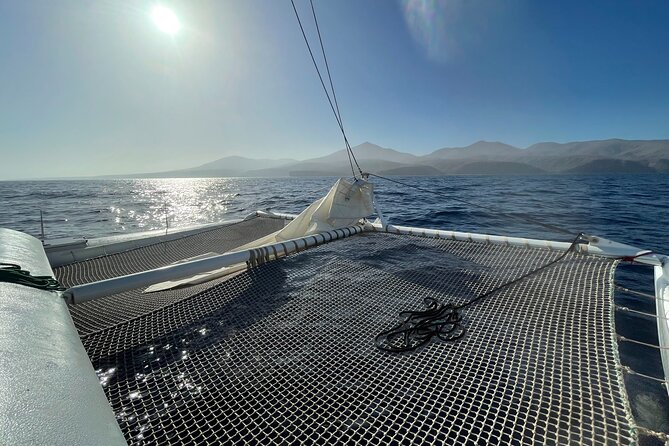
- Silent, emission-free catamaran: a quieter ride that’s meant to be gentler on cetaceans.
- Hydrophone listening is situational: it’s typically used when whales or dolphin groups are vocalizing.
- Small group size (max 12): more elbow room on a 14-meter catamaran.
- Puerto Calero departures: easy meeting point and a return to the same spot after about 3–4 hours at sea.
- Snacks and drinks onboard: you’ll be set up for a comfortable half-day out on the water.
- Responsible viewing distance: the captain won’t chase wildlife, even when you spot a whale.
Why a Silent Catamaran Makes This Feel Different
Most whale-spotting trips are loud by default: engines, chatter, and splashes. Here, the catamaran is 100% silent and emission-free, which changes the vibe right away. I like that you’re not constantly thinking about the boat; you’re watching and listening for the animals’ signals with less background noise.
This matters even if you’re not a marine-nerd. Whales and dolphins communicate at many distances and through patterns you might miss if the environment is noisy. A silent approach doesn’t guarantee sightings, but it gives you a better chance at meaningful audio and a calmer experience overall.
You can also read our reviews of more boat tours in Lanzarote


The Route From Puerto Calero: What the 9:00 AM Start Looks Like
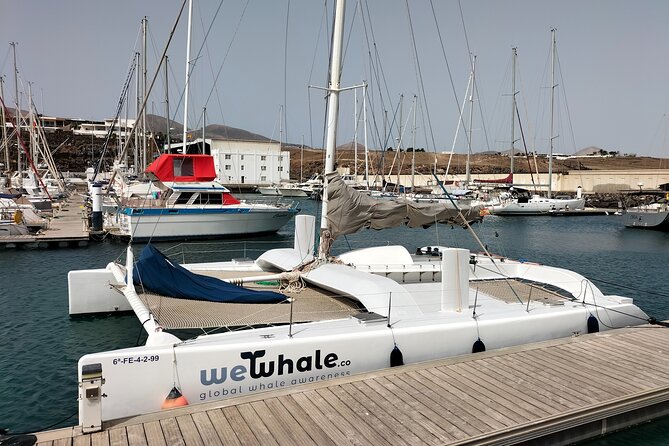
You start at WeWhale Lanzarote, C. Pantalanes, 35571 Puerto Calero, Las Palmas, Spain, with a 9:00 am departure. You’re back at the same meeting point at the end of the activity, after roughly 4 hours total (with about 3–4 hours on the water).
That time window is important. It’s long enough to feel like a real sea outing, not a quick “tour-and-guess.” At the same time, it’s short enough that you’re not signing up for a full day trip. If you’re doing other Lanzarote plans the same week, this schedule is one of the easier ways to add whales and dolphins without derailing your whole day.
One small practical note: this sort of half-day trip tends to sell out around busy weeks. The trip is typically booked about 19 days in advance, so if you’re set on going, I’d grab tickets sooner rather than later.
On Board With a Max of 12: Space, Attention, and Comfort
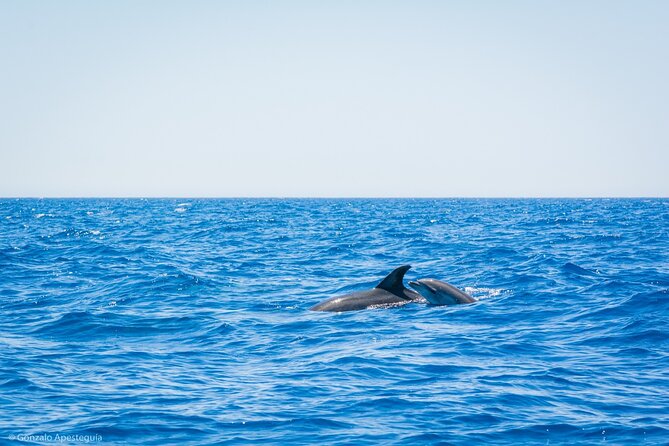
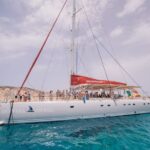
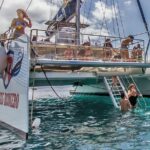
This is a 14-meter catamaran with a maximum of 12 travelers, which is a rare sweet spot. You don’t get the feeling of being herded. Instead, you can actually shift positions, look out where you want, and still hear the crew when they’re sharing tips.
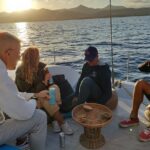
You’ll also have basic comforts onboard: the trip includes snacks and drinks during the cruise. That sounds small until you’re out there scanning the horizon and waiting for something to surface. Having something in hand keeps the time from turning into pure waiting.
The crew is friendly and informative, and the tone seems to matter here. When a trip is small, explanations land better—especially when wildlife behavior is the story, not just the destination.
The Hydrophone Explained Simply: What You Can (and Can’t) Expect
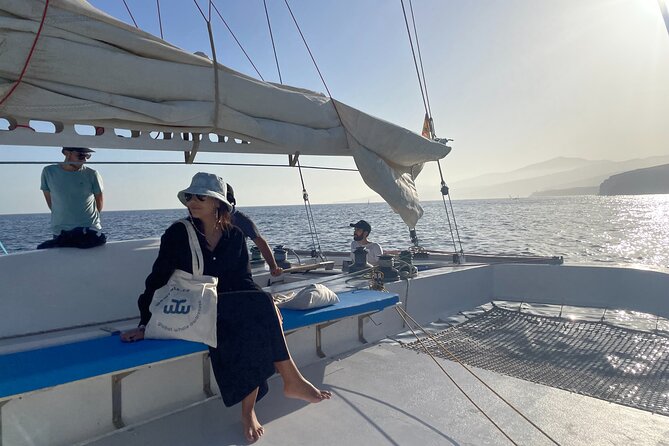
The headline feature is the hydrophone. You’re told the boat carries one, and the goal is clear: to help you listen to whale and dolphin interactions.
Here’s the key expectation to set for yourself: the hydrophone is typically used when whales or groups of dolphins are vocalizing. That means it may not be turned on all the time during open-water travel. In practice, it’s an “only when there’s something to listen to” tool, not a constant broadcast.
So if you’re booking specifically because you want whale songs the whole trip, adjust your mindset. You’re booking a chance to hear interactions when they happen—and with a silent vessel, the opportunity is more realistic. When you don’t hear much, it’s usually not a broken feature; it’s more about timing and animal behavior.
Also watch for communication from the crew. One traveler described asking about hydrophone use and got the explanation that it’s deployed when surrounded by vocal groups. If you care about this part, ask early once you’re on board. You’ll get a straight answer and you won’t wonder later.
Whale and Dolphin Spotting at Responsible Distance
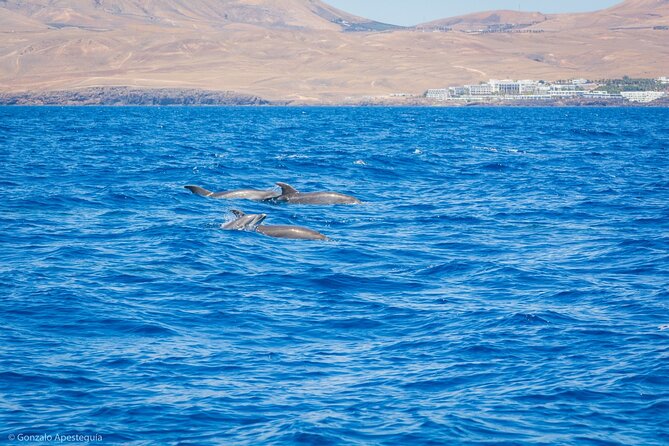
Wildlife trips can be frustrating when you want close views. This one is run with responsible and respectful wildlife viewing in mind, meaning the captain won’t chase animals or force a closer encounter.
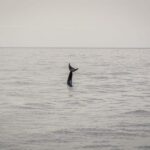
That’s a good policy for the animals—and a mixed bag for your photos. One traveler noted a whale sighting where the boat stayed far away, and visibility was limited at that distance. That’s the trade-off: you’re choosing ethics over a dramatic, close-up moment.
If you want the best chance of actually seeing more than a small spout, bring a simple expectation: sightings may be brief, and distance is part of the deal. There are also binoculars on board available to guests, but make sure you use them if the crew points them out. One review specifically mentioned binoculars were not given out to passengers during a sighting, so don’t assume you’ll automatically have them in your hands.
You can also read our reviews of more sailing experiences in Lanzarote

Weather, Wind, and What to Wear for a Cold Sea Breeze
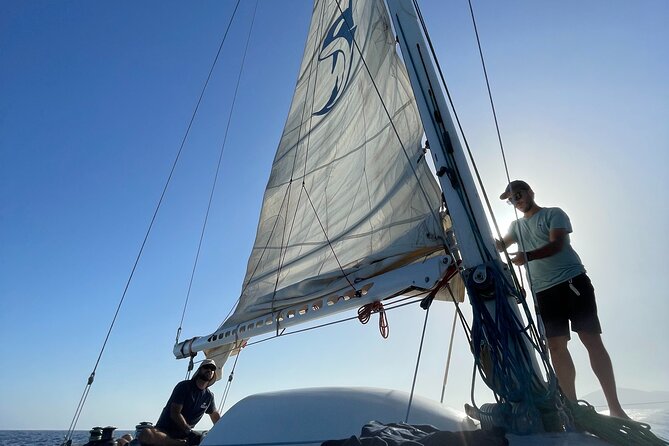
The trip runs in the morning, heading out from Puerto Calero and returning after several hours. On the water, the breeze can change fast. One traveler described the day turning nippy when sun disappeared behind clouds and winds picked up.
So I’d treat Lanzarote sea weather as “bring layers.” A light windbreaker and something warm for later in the trip can keep you from turning the last hour into a shiver session.
And if you’re someone who gets seasick, this is the kind of half-day where I’d plan carefully—but the provided info doesn’t include any seasickness specifics. If you’ve been prone on boats before, come prepared with whatever usually works for you.
Snacks, Drinks, and the Pace Between Sightings
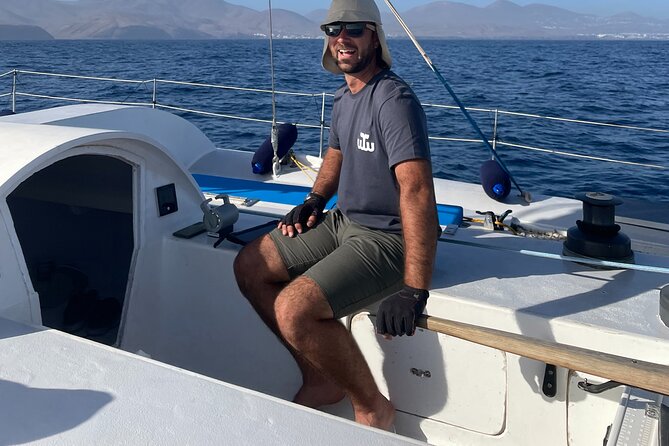
This isn’t a stop-every-20-minutes kind of trip. You sail out to where whales and dolphins might be, then you scan. When you do find a whale, it can be quick—surfaces, spout, then gone again.
That’s why the onboard rhythm matters. Since you have snacks and drinks throughout, you can stay focused on spotting without rushing to eat later. It turns the experience into a real outing, not a stressful scramble.
One more practical detail: if you’re wearing layers, keep them easy to manage. You’ll likely be moving between watching the horizon and checking areas where a sighting could pop up again.
Conservation Angle: Why WeWhale Matters Here
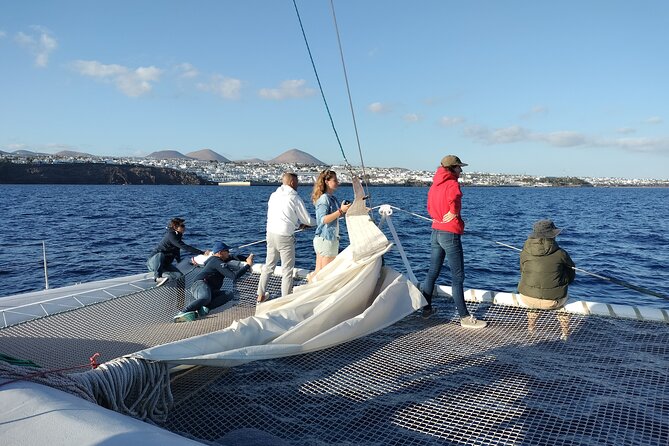
This operator is WeWhale, and there’s a clear conservation connection tied to the ticket. The information shared with guests includes marine conservation campaigns developed by their NGO, including a Save The Iberian Orca campaign.
For me, the value isn’t just that it’s “good cause” marketing. It’s that you’re backing a group that frames the trip around cetacean protection. And it makes the responsible-viewing approach feel more coherent: don’t chase, don’t crowd, just observe.
If you care about what happens after the boat returns to shore, this is the part of the experience worth paying attention to. It’s one of the reasons this trip has strong support in reviews.
Price and Value: Is $114.65 Worth It?
At $114.65 per person, this isn’t the cheapest whale-spotting option you’ll find around the Canaries. But it does pack in a few value drivers:
- Small group size (max 12), not mass tourism.
- Silent, emission-free catamaran, which is harder to find.
- Hydrophone on board for listening opportunities when conditions fit.
- Snacks and drinks included during the cruise.
- A stated marine conservation link via the WeWhale NGO campaigns.
- About 4 hours total, with a meaningful time at sea.
The risk, like every wildlife tour, is that sightings can’t be guaranteed. One traveler caught a Bryde’s whale spout but didn’t see dolphins and felt underwhelmed partly because the hydrophone wasn’t deployed. That’s the kind of disappointment to keep in mind: this isn’t a guaranteed show.
My honest take on value: it’s best when you’re open-minded about animal behavior and you treat the hydrophone as a bonus that depends on what the sea is delivering that day.
Who This Tour Fits Best
This experience is a strong match if you:
- Want responsible wildlife viewing and don’t mind a respectful distance.
- Like the idea of listening as much as spotting.
- Prefer a small boat over big crowded tours.
- Care about the conservation angle behind the operator.
It may be less satisfying if you:
- Expect the hydrophone to be continuously used or always audible.
- Need guaranteed close-range views for photos.
- Have a strong preference for dolphins specifically, since sightings aren’t guaranteed.
Should You Book This Whale and Dolphin Silent Catamaran?
I’d book it if your priority is a calmer, more wildlife-friendly way to watch marine life from Lanzarote—especially if you’re excited by the idea of hearing animals via a hydrophone when it’s likely to work. The small group size and the silent, emission-free concept make it feel more thoughtful than many standard tours.
I’d hesitate only if you’re booking with one narrow expectation: that you’ll hear whales and dolphins through the hydrophone nonstop and get close visuals. This trip is designed for respect and opportunity, not control.
If you want a practical decision rule: book if you’re flexible, bring layers, and plan to use the binoculars once onboard. You’ll be set up for a better experience whether the sea gives you whales, dolphins, or both.
FAQ
How long is the whale and dolphin observation trip?
It lasts about 4 hours in total, with approximately 3–4 hours on the water.
Where is the meeting point?
You meet at WeWhale Lanzarote, C. Pantalanes, 35571 Puerto Calero, Las Palmas, Spain.
What time does the tour start?
The start time listed is 9:00 am.
How many people are on the catamaran?
The tour has a maximum of 12 travelers.
Is the catamaran silent and emission-free?
Yes. It’s described as a 100% silent and emission-free catamaran.
Will the hydrophone be used during the whole trip?
A hydrophone is carried on board, but it may be used when whales or dolphins are vocalizing.
Are snacks and drinks included?
Yes. Snacks and drinks are offered during the trip.
What happens if the weather is bad?
This experience requires good weather. If it’s canceled due to poor weather, you’ll be offered a different date or a full refund.
If you tell me what month you’re going and whether you’re more into seeing dolphins or listening for vocalizations, I can help you decide how to time it in Lanzarote.